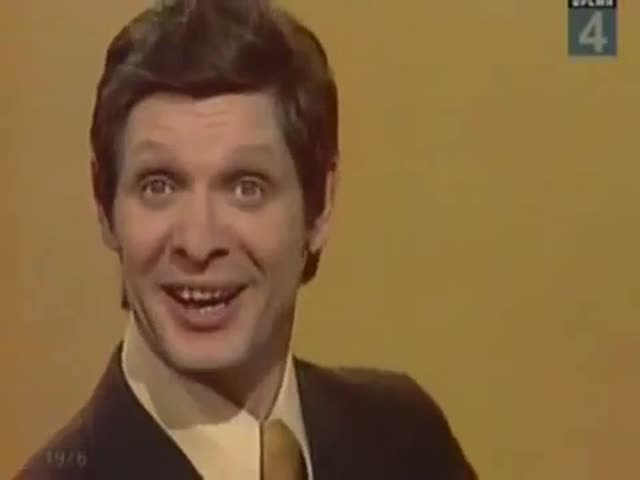
Who Eduard Khil was
Eduard Khil (1934–2013) was a Soviet and Russian pop singer known for his deep baritone and gentle manner of performance. He performed on domestic variety stages and on television, and his repertoire included songs that many listeners had known since childhood. That's why the appearance of his recording on the internet caused a mix of surprise and recognition in audiences, rather than simple curiosity about an unknown performer.
The line from the video that's often cited in descriptions of the meme is "I am very glad, because I'm finally coming home." It's sung accompanied by deliberately meaningless vocalizing, which gave the meme its name: the singer vocalizes "trololo" to the melody, and this sound pattern became the meme's main recognizable element. The recording itself comes from Soviet television, and its original circumstances could not be fully established.
How the video became a meme
The recording had circulated online well before its peak of popularity, but in 2009 it broke into mass circulation on English-language forums and in communities where users liked to find comic contrasts. The serious manner of performance combined with absurd sounds created a surprise effect, and many viewers watched the clip precisely for that contrast rather than for the song itself.
The exact author of the first clip, the user who uploaded it, and the sequence of reposts haven't been established. Different sources disagree, so no specific names or dates that can't be confirmed are given here. It's known only that the clip quickly became one of the most recognizable videos of its time on the internet.
The name and the wordplay
The name "trololo" rhymes with the English word "troll" and is tied to the internet trolling culture popular at the time. Users used the video as a prank: they'd send it to friends as an unexpectedly "serious" song, then watch the reaction. In this way the clip worked as a bait-and-switch joke, where the expectation of music was broken by an absurd sound.
Hence the nickname "Mister Trololo" that stuck. By the same pattern, other "misters" appeared in the Russian-language segment for meme characters, which makes the name recognizable and easy to say. Eduard Khil himself wasn't a participant in internet jokes — his image became a meme thanks to a recording made long before the internet existed.
Use and legacy
The meme was used in discussions of music, in parodies, and in captions for unexpected emotional moments where a serious delivery collides with ridiculous content. Over time the video moved from one community to another and became a classic of the early video internet. Many users who first encountered it in the early 2010s later rewatched the recording deliberately, as an example of Soviet pop music.
The meme's legacy is twofold. On the one hand, it brought fame to a performer who became recognizable to a new audience. On the other hand, internet popularity often simplifies the image: attention gets focused on a single sound rather than the artist's body of work. That's why it's worth remembering Eduard Khil himself, who was a real pop singer, not merely a meme character.
Conclusion
Mister Trololo is a rare example of a meme in which an old Soviet recording became a symbol of internet humor. Its strength lies in the contrast between the serious manner of performance and the absurd sound, and its history shows how recordings from past decades can get a second life online.