What is in the frame
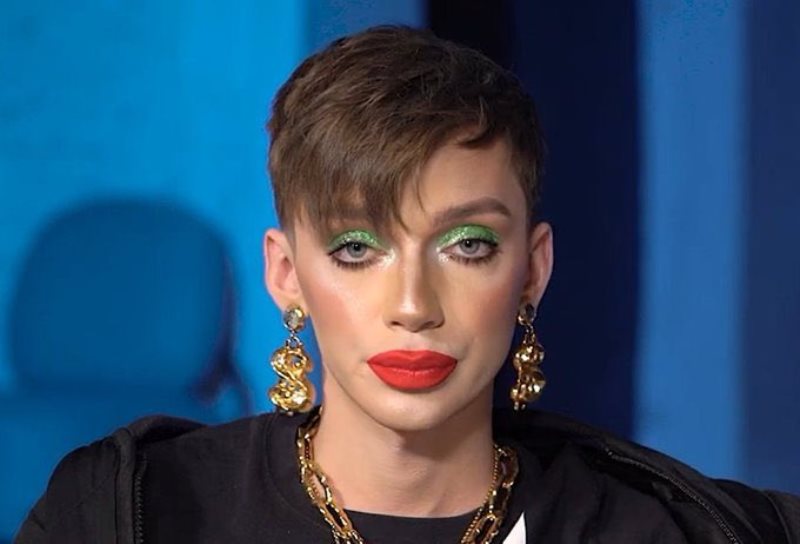
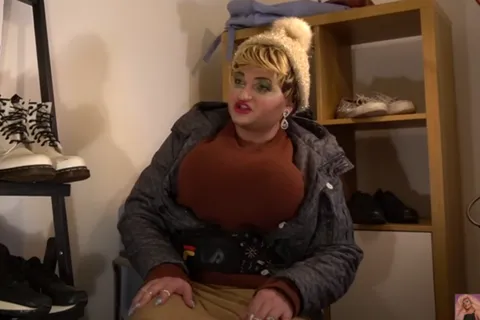
A close-up of a young man against a blue background. Short chestnut hair with bangs, emerald glitter on his eyelids, and lips painted with red lipstick. Large gold earrings shaped like dollar signs, a gold chain around his neck, and a black jacket on top. He looks into the camera, not smiling, lips pressed together.
The expression is neutral, and that is exactly why it is so easy to read as anything. What the man was thinking at the moment of the shoot is unknown: the meme is built on the viewer's impression, not on his actual state.
Who is Andrey Petrov
Andrey Petrov is a Russian video blogger and makeup artist, known for his videos and his makeup-focused public image. According to media reports, in 2018 he took part in the TV project “Meykapers” (Makeupers). Details of his biography and private life have nothing to do with the meme and are not discussed in this article.
It is not known for certain where the frame was taken from: a broadcast, an interview, or his own video. When it became a reaction template in the Russian-speaking internet is also not reliably known, and the year it appeared remains unestablished.
How the template reads
Three details matter for a caption. The festive, dressed-up look with glitter and gold contrasts with a completely serious face: it is as if the man is set to go to a party, but he regards what is happening with doubt. The direct gaze addresses the caption to the viewer. The pressed lips create a pause: after it, one wants to hear “yeah, right.”
It is a “I don't believe it” or “seriously?” reaction without words. It can be placed under any claimed fact, promise, or excuse.
The template works well as a reply in a chat when an interlocutor promises the same thing for the tenth time. The picture replaces the words “yeah, sure” and lets you avoid getting into an argument.
Paired with a short caption, the face reads as a mild challenge: the man doesn't object out loud, but it is clear he has more arguments than his interlocutor.
Caption examples
“When a friend says he'll start running in the mornings from Monday.” A joke about chronic procrastination: the caption and the face converge in a silent “yeah, sure.”
“The store says: up to 70% off.” The implication is that the discount applies to one item, not to everything. The reader draws the conclusion themselves.
“We're submitting the project tomorrow, we just need to finish the code, tests, and documentation.” The comedy is in the word “just”: the list ends somewhere other than where it was claimed to end.
“This is definitely the last episode, I told myself at two in the morning.” The caption turns the template into self-irony: one can doubt oneself too.
Usage tips
The template works best when the caption contains someone's claim or promise that nobody believes. That way the skepticism is aimed at the situation, not at the person in the photo. Do not use the frame to mock someone's looks or image: the makeup in it is just part of the scene, not a reason for jokes.
A good caption is short and relies on a specific “when.” Extra explanations dampen the effect: the face already says everything.