It started with Rogu and tapping on the table
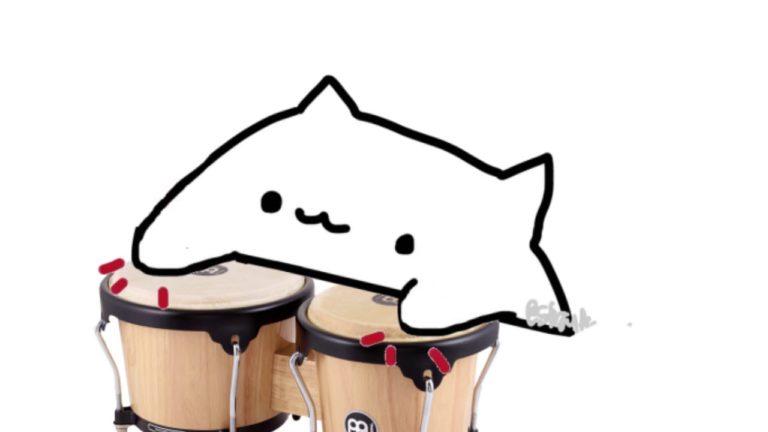
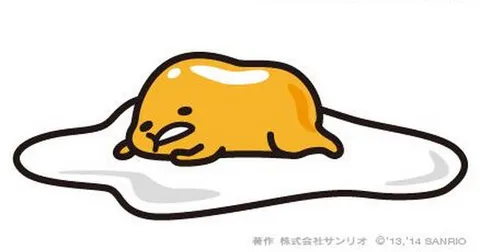
On May 6, 2018, the artist StrayRogue posted a short animation of the character Rogu: it quickly taps its paws against a surface. The next day, DitzyFlama responded with an edit in which the character seems to play bongos, adding music from Super Mario World. These are two different stages: the original drawing and the musical reworking. StrayRogue himself called the character not a cat but a cat-like blob; the name Bongo Cat stuck to the musical version.
By September 2018, this construction had grown considerably online: artists were fitting the paw movements to other melodies and turning the drums into new instruments. That is why the exact day of the first post should not be confused with the period of wide fame: the original pair of posts dates to May, while the musical wave expanded later.
A small movement, a big sound effect
In this version the cat barely changes: the rounded silhouette, two black dot eyes, and paws remain, but the meaning changes with what they touch and what sound accompanies the frame. The simple animation lets the viewer complete the strike in advance. The bongos make it understandable even without a long storyline: the paws come down, the sound responds, and the character seems like a performer.
In memes with songs, the drawing becomes an almost musical cursor. A version with a different melody does not have to draw a whole clip: a few movements are enough for the cat to “play along” with a recognizable rhythm. Here the cat is overlaid on real drums, but the static frame does not show the synchronization; it belongs to the animated and musical versions of the format.
From bongos to remixes
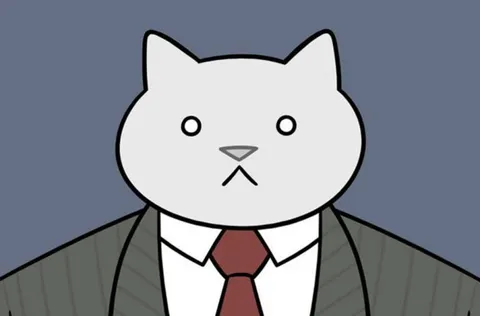
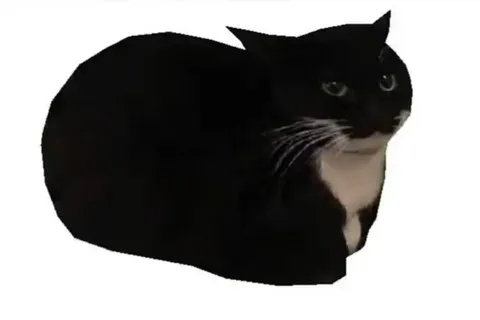
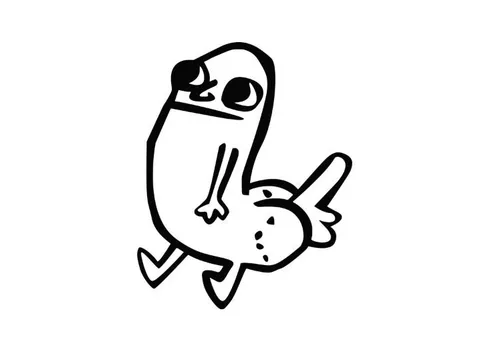
A remix can change several layers at once. Keeping the melody with a different instrument resembles a cover; a new song with the same tapping turns the cat into an accompanist. If the drawing combines several characters, a small ensemble emerges: each gets its own part. A musical joke can therefore be both a recognizable parody and an independent performance. The viewer may smile at the absurd musician and then start listening to how precisely the movements match the rhythm.
Later the image was used as an interactive indicator: the cat reacted to key presses or clicks, as if computer actions too were becoming a game. This continued the same visual gesture, but in a different environment: a short movement accompanied not a song but work at the computer.
Caption examples and remixes
“Caption example: I'm pretending to type calmly while the boss battle music plays” — here the cat can tap on the keyboard in time with a dramatic theme. “Caption example: When a coworker says ‘five minutes’ and pulls out a 40-slide presentation” — the drums can be replaced with folders or keys, and the rhythm turns an innocent action into a building accompaniment.
One more variant: “Caption example: My only brain cell is trying to remember the password.” For short musical versions a particularly simple caption works, because the viewer has time to follow the rhythm. If a complex fragment is chosen, the enjoyment shifts to recognizing the notes and melody. The cat remains the same little figure, but the music changes the impression: it can play solemnly, anxiously, or deliberately awkwardly.