One idea, two different cat stories
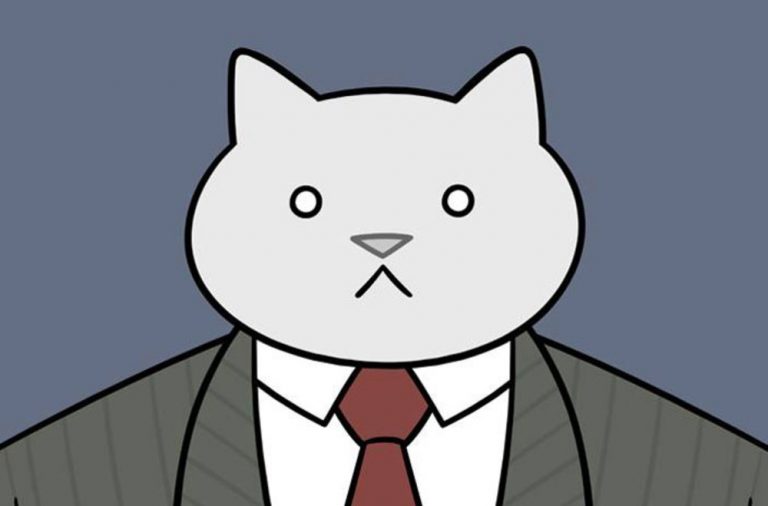
The photo meme Business Cat had been spreading since 2011: a black cat named Emilio in a small tie was accompanied by captions that mixed the language of bosses with cat demands. The name proved convenient for the very idea of a businesslike animal. However, the light-colored drawn hero in this picture is not a reworking of that photo and has its own authorship.
In 2014, artist Tom Fonder began publishing The Adventures of Business Cat. He developed the concept together with Rachel Robins; at first the cat stories appeared as separate interludes in Happy Jar. The success of the first issues turned a one-off joke into a regular series. In 2016 the book collection Money, Power, Treats came out, and in September 2018 Fonder announced the end of the series. The individual pictures that spread continued to live outside the sequence of issues: the familiar boss became suitable for new office situations.
A portrait without a ready punchline
The viewer sees a light cat head with small round eyes, a triangular nose, and simple black lines for a mouth. Below are a white shirt, a red tie, and a gray suit with stripes. The background is a plain gray-blue. The image has no comic panels, coworkers, desk, or line of dialogue. It presents the character but does not yet tell a separate story about his deed.
The face shows almost no expressed emotion. The clothes convey the business status, while the cat's head shape remains a constant promise of unexpected behavior. A large portrait works well for a first-person line: the cat can supposedly discuss the budget, issue an order, or assess a result. At the same time, the same calm appearance fits both an order and an absurd excuse. The punchline is created by the added text, not by a pre-drawn fright or anger.
A boss obeys his own instincts
The series' main mechanism is the collision of a human position with literal cat behavior. The executive must keep to a schedule and consider the company's interests, but the animal wants to sleep, watch the window, and immediately change its decision about whether the door is open. The expensive suit gives these desires the look of a managerial stance. Those around must talk to them as if they were orders from management.
Such a hero can both mock office hierarchy and inspire sympathy. An employee recognizes the familiar unpredictability of a boss; a cat owner recognizes the usual demands of a household pet. The comedy intensifies when an ordinary whim is explained in complicated business terms. A box becomes the infrastructure of rest, and a view from the window becomes research into the external market. In the author's comic this unfolds through a sequence of actions; in a single portrait, the same job is done by a short caption with an unexpected object of business interest.
A meeting, a purchase, and a new strategy
In an invented plot, the cat announces an unscheduled meeting by the window. Employees arrive with reports, but it turns out the topic is a pigeon on the windowsill. The portrait can be given a serious heading: “We need to study the competitor's actions.” The joke preserves the office format of discussion, even though the boss's attention is entirely captured by a cat's goal.
Another invented example shows an approved purchase of expensive equipment. The cat congratulates the team on the acquisition, then demands they leave him the large cardboard box and take away everything else. A third variant is a message about switching to a flexible schedule: the manager promises availability at any time except all the hours when he wants to sleep. Here business language justifies a personal habit. In every case the hero stays recognizable thanks to the combination of two roles: he is capable of giving human orders, but chooses them by entirely feline logic.