The character and the comic's format
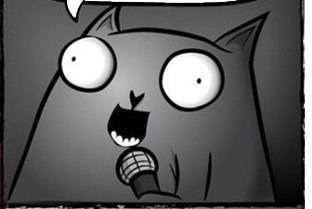
At the center of the comic is a gray cat with large round eyes and an open mouth, performing in front of an invisible audience with a microphone. The panels are short and almost always built the same way: the cat delivers a punning line, and then its eyes widen, as if it itself were waiting for the crowd's reaction. The drawing is deliberately simple, with dark outlines and gradient fill, which makes the character's emotion readable even in a small preview.
The comedic frame matters more here than the plot. The cat doesn't develop a story or hold a dialogue; it exists as a performer, and the viewer ends up in the role of the audience that has to judge the joke. That's exactly why the comic transfers so easily onto any topic: all you need to do is swap the text.
Origin
The comic's author and the date of its first publication are not known. The meme dates to around 2017. Such comics usually circulate without attribution: they get reposted in communities, remade, and saved into image collections, which makes it hard to trace the original source.
The English-language name "Stand-up Comedy Cat" stuck to the character in the international internet, while in the Russian-speaking space it's more often called the stand-up cat or the pun-cat. Both names describe the same thing: a performing cat whose jokes don't make the audience laugh.
The mechanics of the joke
The basis of the humor is a pun delivered with a professional comedian's confidence. The contradiction between the serious delivery and the flat text produces the comic effect. The bugged-out eyes work as a visual amplifier: as the joke develops, the cat's emotion grows, and in the final frame it looks as though it's astonished by its own wit.
The device is close to classic "bad stand-up" comedy: the viewer laughs not at the joke but at the confidence of the comedian who believes in it. Because of this, the meme works both as a reaction to bad humor and as self-deprecation about one's own failed jokes.
Use in news and comments
The most frequent use is as an accompaniment to news headlines. When a news item sounds mundane or absurd, the cat with the microphone gets added to it, and the picture becomes a comment from the editor or the post's author. This way the meme turns a dry headline into a joke without adding any extra text to it.
In comments, the stand-up cat is also used to respond to someone else's failed joke. The picture conveys a polite but ironic assessment: the joke's author gets a clear signal that their bit didn't land, while no one is directly insulted.
Place among cat memes
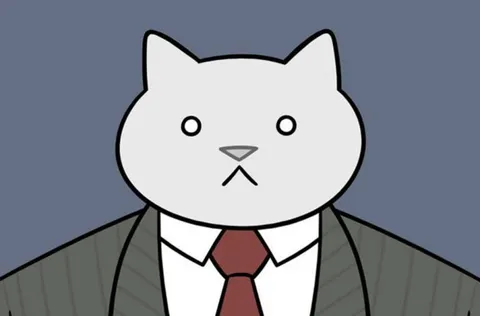
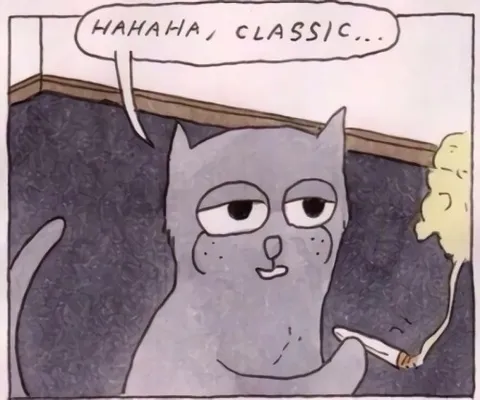
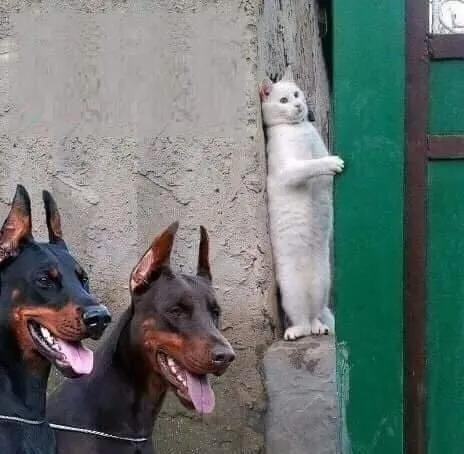
Cats have long held a special place in the Russian-language internet, from early image macros to videos and parody comics. The stand-up cat stands out because its humor is built on speech and a stage frame rather than just a facial expression. That's why it's often used alongside other characters that react to the joke, such as an audience cat or a cat that silently stares into the camera.
The character's popularity rests on how easily the picture reads and how quickly it transfers into a new context. Another reason is the recognizability of the silhouette: all it takes is a gray cat with a microphone for the viewer to understand that another unfunny joke is coming.