The caption on the card
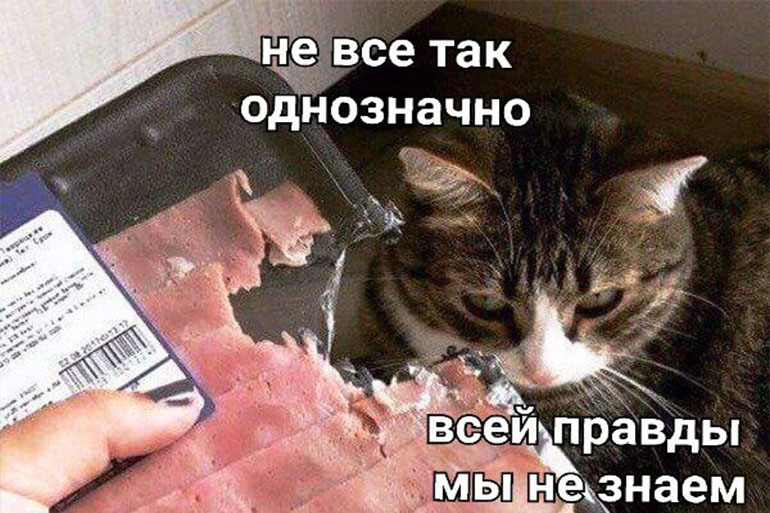
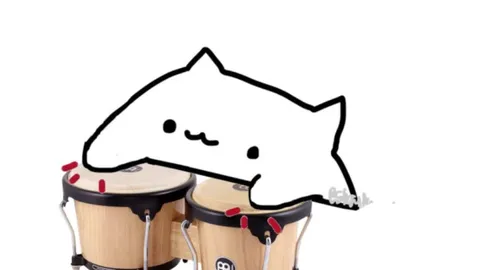
In the image a large orange-and-white cat sits at a keyboard and looks at the screen. Above it is written “It's not so clear-cut”, and below, “We don't know the whole truth” (the exact wording of a variant may differ). The picture turns the pet into an interlocutor who seems unwilling to draw a conclusion from an obvious situation. The comedy comes not from the behavior of a real cat but from the familiar human habit of dodging a simple answer by pointing to an “incomplete picture.”
The phrase before and after 2022
The expression “it's not so clear-cut” existed in political discussion before this particular cat appeared and was used in a variety of disputes. After 2014 it became a recognizable element of Russian-language talk about Crimea and the war in eastern Ukraine, and after Russia's full-scale invasion in 2022 it got a new wave of satirical use. Users began applying it as the line of those who face obvious evidence but refuse to accept the conclusion. The exact origin of the phrase itself is disputed; it should not be confidently attributed to one author or quotation.
Irony and political meaning
In the everyday version, the cat may refuse to admit that it knocked over a flowerpot or ate the sausage itself. In the political reading, the same line points to denial of documented events or a substitution of the subject of the dispute — two levels the cat picture itself does not merge, since the image carries no serious context on its own. The meme targets a specific rhetorical device, using uncertainty as a universal shield, not every claim that a topic is complex; complexity itself is not the same as insincerity.
Examples in two contexts
For domestic jokes: “Who left the cat food bag open?” The cat: “It's not so clear-cut.” In a work chat, a screenshot of a tangled spreadsheet can be captioned: “Why doesn't the total add up? The whole truth is in a formula nobody has opened.” These variants play safely with literal denial. A political post needs a careful reference to verifiable circumstances in the text itself and a clear line between fact and opinion; a picture alone is not enough to explain an event.
Do not turn the meme into a substitute for facts
Early variants of the image and the exact first publication need verification: the same expression appeared with different animals and captions. The picture confirms only a cat at a computer and a specific text, not the origin of the formula. If the meme is used in an argument about war, a court case or violence, it must not replace sources and arguments. Nor should every doubter automatically be assigned to one political group. An accurate description says what exactly is being denied and what data is available, rather than only repeating an ironic stamp.
Satire can target a character who demands “the whole truth” while ignoring evidence that has already been published, but when real events are discussed, the reader should know which data have been verified and which questions remain open. Rejecting false certainty is not the same as excusing disinformation, and acknowledging nuance is not denying facts — keeping that line clear is what keeps the meme from becoming a blanket label against any dissenter.