From barking to an unpleasant truth
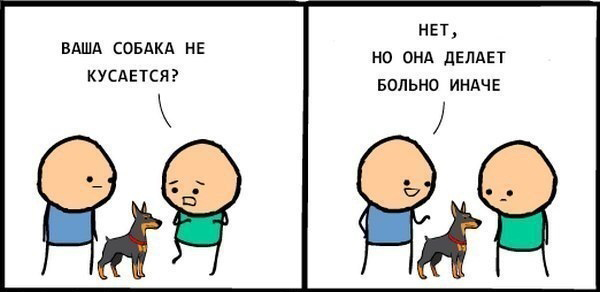
The original comic by Chris Wilson was published on May 18, 2015, in the Cyanide & Happiness series. The conversation opens with a question about a dog, and the owner says its bark is worse than its bite. The rest of the action takes that comparison literally: an ordinary warning about an animal’s temperament turns out to be preparation for a mounting unpleasantness. Simple stick figures and a recognizable dog make the situation quick to read.
Later, users changed the way the pain is inflicted. In parodies known from November 2015, the dog spoke hurtful words instead of barking. In October 2016, a shortened version spread on Reddit with a warning that it hurts in a different way. In this way, physical danger turned into emotional danger, and the final line became a replaceable part of the comic. In Russian-language remakes, the animal was assigned to deliver disappointments, mockery, or unpleasant facts.
Two panels without a final bite
This template has exactly two panels in a black frame. In both, a person in a blue T-shirt stands on the left and one in green on the right, with a Doberman wearing a red collar between them. In the first panel the question is asked whether the dog bites. In the second, its owner replies that it hurts in a different way. The dog says nothing yet, and there is no final reaction from the person.
It is precisely the lack of an ending that leaves room for a new joke. The first two panels build expectation and shift the apparent threat: the viewer braces for a bite but gets a promise of a different kind of harm. The simple graphics do not distract from the dialogue. To complete the macro, one only needs to add the dog’s words and, if desired, show how the addressee takes them.
The dog as an unexpected interlocutor
It is already funny that the animal suddenly joins a conversation about human feelings. The Doberman looks like a typical physical threat, but it gains knowledge of a forgotten duty, a failed result, or a secret fear. Its line works like an unexpected revelation. The owner’s image becomes a warning that the reader misread along with the character.
The final line is usually short and concrete. It does not have to contain a direct insult: an unpleasant fact can be more precise than crude swearing. The comic then rests on a recognizable vulnerability, such as waiting for a reply or fear of being late. The dog seems to say what the listener was trying to avoid remembering. Only a few panels separate an everyday question from a personal punchline, so the effect resembles a small trap.
Three invented Doberman lines
The first invented ending: the dog says “You sent the email without the attachment.” The person came to ask about a bite but remembers a work mistake. In a second variant, the dog remarks: “Your friends have already started the next season.” This line spoils the expectation of a shared viewing and turns an everyday disappointment into that same other way of causing pain.
The third example is “You set the alarm for the evening.” The hero suddenly understands why the morning went so calmly. All three lines are invented to explain the structure. They do not need a long continuation: a specific detail changes the person’s state right after the promise of an unusual threat. The two-panel template provides the setup, while the chosen dog line creates an individual punchline, which keeps the various remakes recognizable.