what's shown in the picture
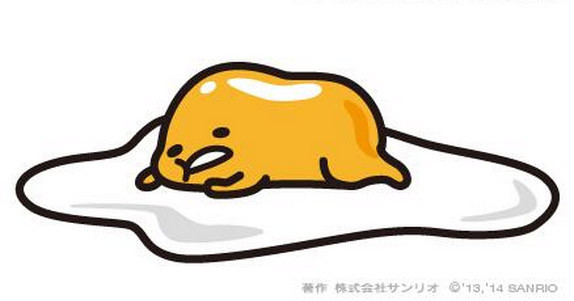
The image shows a yellow egg yolk spread over the white on a frying pan. The character has no arms or legs, its eyes are barely visible and squinted, and its mouth is slightly open. It lies motionless and looks as if it has no strength left even to get up. The outline is drawn in a black line and the background is white, which makes the image simple and easily recognizable.
On the surface Gudetama resembles an ordinary dish, but its facial expression flips the picture's meaning. Instead of an appetizing breakfast, the viewer sees a creature that has resigned itself to the mundane routine ahead of it. It's precisely this contrast between a familiar object and an apathetic personality that makes the character so distinctive.
origin
Gudetama was created by Sanrio, the company known for characters like Hello Kitty. The name comes from the Japanese words "gudegude" (lazy, listless) and "tamago" (egg), meaning "lazy egg." The character debuted in 2013, and official materials list a copyright date of 2013-2014.
At first Gudetama was just an ordinary mascot, but it quickly caught the attention of the Japanese audience thanks to an image that expressed the exhaustion of modern life. Over time, stickers, toys, cartoons, and themed cafes appeared, and the character became popular outside Japan as well.
how the meme is used
Online, Gudetama is used as a visual symbol of laziness, apathy, and the desire to do nothing. Users pair the character with captions like "When Monday starts and you have no energy" or "When the exam is coming up and you're still lying down." The picture suits describing a state wordlessly, because its image registers instantly.
In Russian-speaking communities, the character often turns up in jokes about work, studying, and household chores. It's drawn on mugs, stickers, and cards, and the image of the "lazy egg" has become synonymous with not wanting to get off the couch.
why the character is popular
Gudetama's popularity comes from its ability to talk about complicated feelings through a simple, funny form. The character doesn't condemn laziness but accepts it, so the viewer sees it as a friend who understands exhaustion.
On top of that, the meme is safe and friendly: it doesn't mock any specific person and requires no knowledge of context. Thanks to that, Gudetama has become recognizable in many countries and remains an example of how a Japanese mascot can turn into an internet symbol.
commercial success and lifestyle
Gudetama quickly became the star of a wide range of merchandise, from stationery and toys to household items. Its popularity showed that an image of a lazy character can appeal not only to children but also to adults who relate to the idea of rest and rejecting constant rush.
The character also became a prompt for conversations about burnout culture and fatigue. Gudetama serves as a kind of reminder that sometimes you need to allow yourself a break, and in that sense the meme takes on a tone that is not just ironic but genuinely warm and human.
It also matters that the character hasn't become a symbol of passivity in a negative sense. Most users regard it with sympathy rather than judgment, which is why the meme can be used for self-deprecation without feeling guilty about wanting to rest.