What the video is
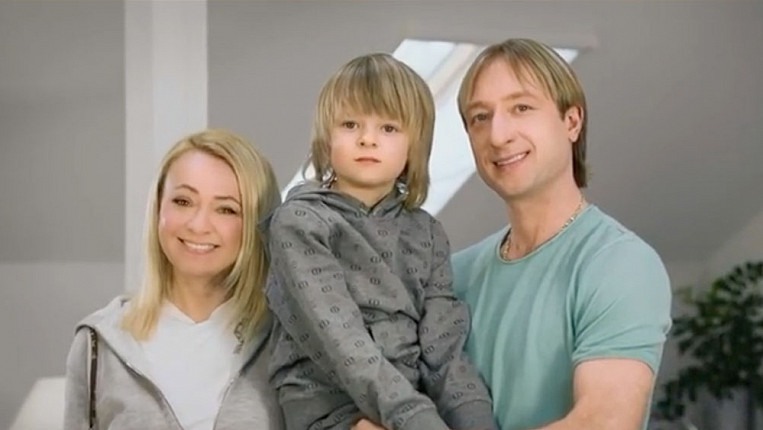
On the eve of the vote on amendments to the Constitution, which ran from June 25 to July 1, 2020, a short video appeared online featuring Evgeni Plushenko, Yana Rudkovskaya, and their son. Among the proposed changes was one that reset the presidential term limits. The video was accompanied by a caption saying that each person's voice matters in decisions that concern citizens' lives.
The plot is built like a conversation at home. Rudkovskaya explains to her son what the Constitution is: according to her, it is a special book in which all our rights are written down. The boy jokingly proposes an amendment so that he can skip training and invite friends over. Plushenko suggests discussing it at a family council. The video was one of several featuring celebrities ahead of the vote.
What appears in the frame
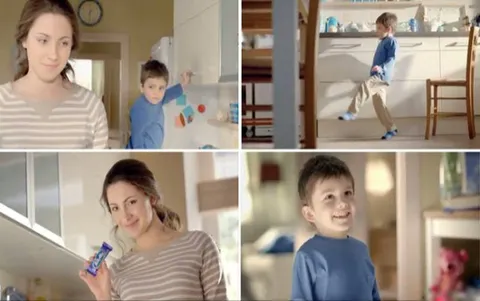
The template preserves the entire composition of the video: a bright room with an attic feel and a window in the sloped roof, a woman with light hair and a smile, a man in a turquoise T-shirt, and a boy in a gray hoodie whom the man holds in his arms. All three look straight into the camera, and their poses recall a typical family photo from an advertisement for household appliances or insurance.
It was precisely this glossiness that became the main target of jokes: a serious political topic presented in the aesthetic of a yogurt commercial. The child's name is not used here: he is a minor, and the meme is built on the genre of the video, not on him.
Reactions and parodies
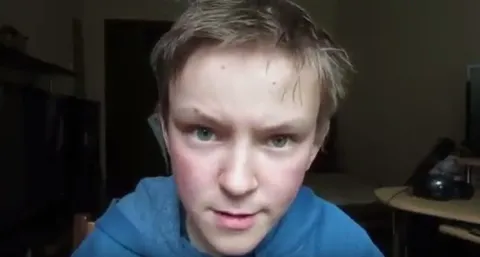
The reactions were varied. Reviews noted that fans' opinions were split: some saw the family's participation as a personal choice, while others criticized celebrities' involvement in campaigning. Parodies soon appeared: for example, comedian Ilya Sobolev released a video on June 17, 2020, in which he played all the roles himself and mocked the child's participation in the campaign, and Ksenia Sobchak released her own version.
Keep in mind that the meme does not judge the people in the photo and does not prove their convictions. It mocks not specific people but the form itself: staged advertising, where a family speaks scripted lines and a serious subject is presented as a cute domestic scene.
Caption examples
“The family council decided: pizza, not sushi.” The caption uses the words of the video about a family council and moves the format to a trivial matter.
“When the question ‘shall we vote on the date of the office party?’ in the work chat has already been decided by the manager.” A joke about democracy that looks like a formality.
“Mom explains why we unanimously voted for cleaning at home.” Fits a domestic scene with forced consensus.
“An ad where everyone is happy, but nobody uses the product.” A short caption about the general impression of the advertising genre.
How to use the template
The meme works best in jokes about showy unanimity, staged family scenes, and “voluntary-compulsory” polls. Do not use the frame to insult the people in the photo, and certainly not for jokes about the child. A good approach is to caption not the heroes but the situation itself: a “family council,” the “constitution” of the kitchen, an “amendment” to the rules of home life. This keeps the joke light and keeps it from turning into a personal attack.
It is also useful to remember that the picture contains no joke of its own: it works only when there is a caption about showy friendliness or a staged scene nearby. The more mundane the trigger, the clearer it becomes that the target is the staged-advertising device itself and not the people in the frame.