What is visible in the frame
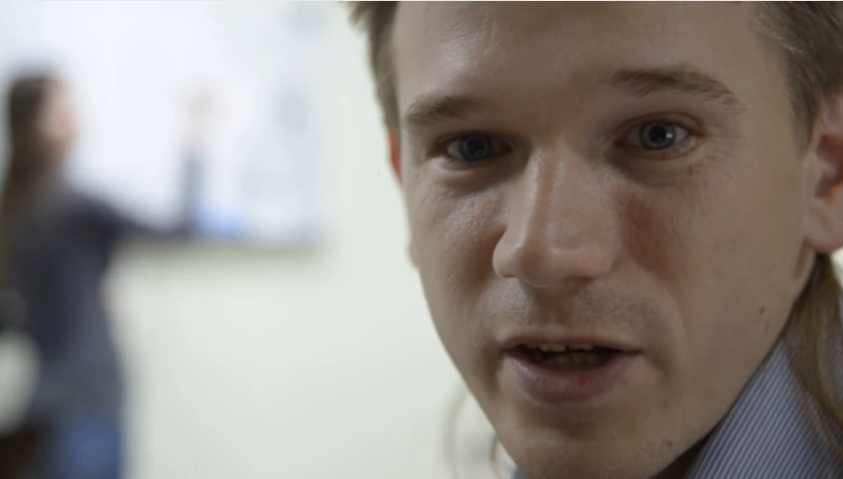
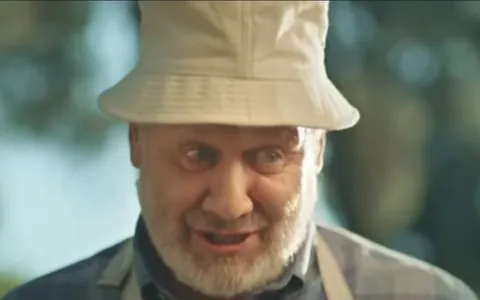
The shot is a close-up: a young man with light brown hair looks into the camera, his face filling the right side of the frame. He wears a thin-striped shirt, and his mouth is slightly open, as if he is speaking. On the left, a light wall is blurred, with a board or screen hanging on it, and the silhouette of a person in dark clothing standing in front of it.
This is a still from a video, not a posed photograph: graininess and soft focus typical of online video are visible. There is no caption on the frame. The meme's meaning is tied to the phrase and the manner of speaking, not to the speaker's personality, so for captions the tone matters, not the person.
The video that spread in 2016
The promotional video was posted on YouTube on January 22, 2015, and at first it gathered few views. In it, the head of the Sokol studio talks about his employees and their tasks: according to the script, the team builds a website and holds a meeting in a couple of minutes. The studio, according to published reports, is located in Novocherkassk in the Rostov Region, although some outlets simply called it a Rostov studio.
The video went viral in November 2016: on November 14, a popular design community posted it, and the next day online publications wrote about it. After that, the quotes spread across social media. The format is built on a flat, businesslike intonation, which sharply contrasts with the everyday, almost homey shots and with the speed of work the presenter describes.
What stands behind the phrase
The phrase sounds like a calm summary: something went wrong, but work goes on. The humor lies in the fact that this even-keeled confidence is applied to everything, from a minor breakdown to a missed deadline. Users plug any trouble into this formula, and the effect holds because the tone stays businesslike.
Another quote from the same video also took off: “Guys, meeting.” It works on the same principle: a short, mundane formula sounds too solemn for the situation, and the mismatch creates the humor. Both phrases suit office jokes, but “keep working” is broader: it can be used to respond even to a personal failure.
Parody and the phrase's later life
On December 28, 2016, the evening talk show “Vecherny Urgant” aired a parody of this video called “Ivan Reveals the Secrets of Preparing a Broadcast.” It repeats the structure of the original: the host talks about his staff, and the work unexpectedly turns out to be finished ahead of schedule. This move shows how recognizable the format had become, since television began referencing it.
The phrase reached a wide audience precisely through copies, retellings and parodies. That is why it is useful to distinguish the original video from secondary versions, which often change details and dates. For the meme this does not matter: it needs only the intonation and the recognizable structure of “trouble plus a calm conclusion.”
Caption examples
Four captions invented for this frame. In each, the phrase “Great, keep working” comes at the end, preceded by a description of some trouble.
“The server crashed on Friday at six in the evening. Great, keep working.” The pause between the alarming fact and the flat ending creates the irony: the description of the outage sounds like a plan for the weekend.
“The client asked us to redo the website, and the deadline was yesterday. Great, keep working.” Here a shift in expectation does the work: the deadline has already passed, yet the tone stays calm.
“The coffee machine served tea and apologized. Great, keep working.” A small everyday detail shows that any malfunction can be taken with a smile.
“The meeting was scheduled for nine, and everyone is still on the road. Great, keep working.” A two-part structure: a fact and a conclusion that does not fit with it. It is exactly this mismatch that makes it funny.
How to use the frame
The caption works best when the situation described is familiar to most viewers. Then the short line at the end reads as self-irony, not as a jab at someone specific.
For this frame it is important to keep the calm tone and not add more emotion than the subject himself shows. The phrase relies on evenness, and the fewer explanations, the more expressive the caption. Do not use the picture to mock the speaker or his studio: the meme is about intonation, not about the person.