What the picture shows
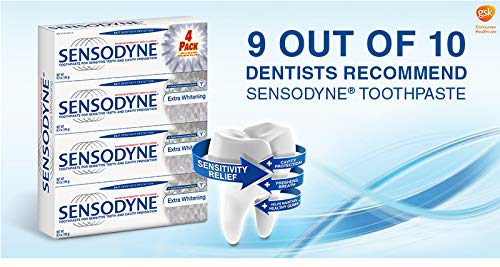
An advertising banner with four packs of Sensodyne whitening toothpaste on the left, and on the right, in large letters: “9 out of 10 dentists recommend Sensodyne toothpaste.” Below is a tooth wrapped in blue ribbons with arrows and captions describing the paste’s properties. In the upper right corner is a small emblem of the manufacturer.
For a meme, this banner serves as an example of the genre: it says nothing specific about the product, but promises public approval, a number, and a white lab coat. The toothpaste itself and its quality are not the subject of the joke; what matters is how the phrase works.
Where the formula came from
The modern look of this kind of advertising was shaped by Trident chewing gum. In 1976 the manufacturer, Warner-Lambert, launched commercials claiming that four out of five dentists recommended sugar-free gum to patients who chew gum. The study, as reported, covered about 1,200 doctors, and roughly 85% of them chose the sugar-free variety.
But the doctors were asked about the type of gum, not the brand. The phrasing created the impression that Trident itself was being recommended, even though the whole product category was named. Later, similar turns of phrase, such as “nine out of ten” and “more than 80 percent,” were carried over into toothpaste ads. In 2007 the British advertising regulator ruled that a manufacturer’s claim that more than 80% of dentists recommended its toothpaste was misleading, because respondents could name several brands.
The joke about the one dentist
The recurring question is: what does the tenth one think? Even before the internet spread, the host Jay Leno put a joke on this theme into circulation, coining the line that nine out of ten doctors agree that one out of ten is an idiot. The meme grew out of this as a continuation: nine agreeing figures share a common line, while the tenth stands apart.
In August 2019 a picture on Reddit of a cat named Smudge gathered more than forty thousand upvotes. Nine of its reactions are approving and one is displeased. This format turned the tenth dentist into a stubborn loner who refuses to give in to advertising.
Why the meme became universal
The joke spread beyond toothpaste ads because any shared opinion can be split into “nine” and “ten.” If almost everyone agrees, then the lone dissenter is either the smartest or the most stubborn, and the caption itself suggests which role the author has assigned to himself.
The phrase also works as a sign of distrust toward advertising: numbers inspire confidence but do not reveal who was surveyed or how. So the meme is worth reading as a small note on how statistics without details prove nothing.
Caption examples
“Nine out of ten friends love pizza with pineapple. I’m the tenth, who just eats quietly.” Gentle self-irony: the tenth here is not a rebel but a quiet eater.
“Nine out of ten colleagues answer emails within a day. The tenth is me, but it’s Wednesday.” A joke about delay that turns a shortcoming into a “position.”
“Nine out of ten dentists recommend brushing your teeth twice a day. The tenth is my dentist, who tells me not to keep quiet while he drills.” Here the tenth dentist appears quite literally.
“Nine out of ten weather forecasters promised sun. The tenth handed me an umbrella.” The disagreement in the forecast gives a joke about how the few are always the ones who are right.
How to use it
Suitable for captions about public opinion, advertising promises, and surveys where everyone has clearly colluded. It is better to name a specific nine and a specific tenth: the more precise the roles, the funnier it is.
The banner works well as an illustration of the formula “number plus authority.” For contested topics where facts matter, the joke should be kept only as a stylistic device, not as an argument.