From a sentimental post to a music command
The phrase had predecessors: parodies of overly dramatic stories after which the author asked readers to hit the like button. The shift from a tragic tone to a mundane action already created the joke itself. One of the known traces of the Alexa version leads to a Tumblr post by user bisexuael from June 19, 2018. Addressing a voice assistant replaced the request for engagement and gave the final line the look of a real command to a device.
“Despacito” is a song by Luis Fonsi and Daddy Yankee, released in 2017 and becoming a very prominent international hit. For the meme, its recognizability was more convenient than serious funeral music: after a statement of sadness, one could immediately picture a familiar dance rhythm. In summer 2018 the expression spread on Tumblr and Twitter, and the song's title was replaced with soundtracks and other songs. The scheme remained constant: event, reaction, unexpected musical request.
The speaker awaits a request
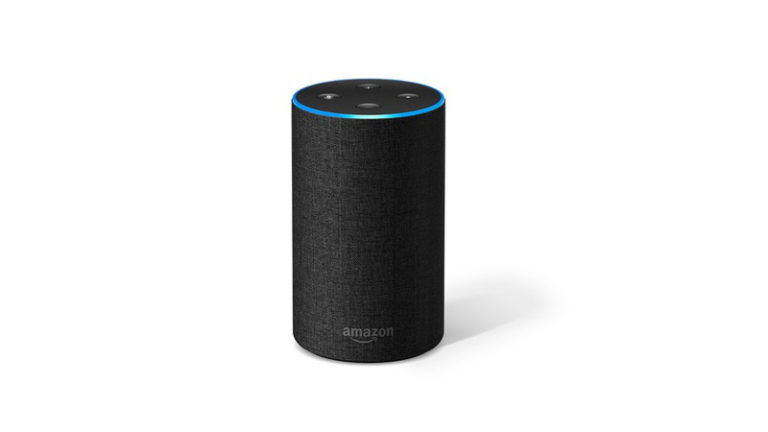
The image shows a black cylindrical Amazon Echo speaker. Its top edge is surrounded by a blue light ring, and buttons are visible on the upper surface. The body is covered in dark fabric, and a small Amazon logo sits at the bottom. The background is white, and a soft shadow lies near the base. This picture contains no meme text, no person experiencing a misfortune, and no “Despacito” cover.
The speaker stands for an invisible interlocutor to whom the final action can be entrusted. The device expresses no sympathy and does not explain people's actions: its role is to make the verbal resolution practically achievable. When a caption is added to an object photograph, the story seems to acquire stage props. The reader sees the addressee of the command and can mentally hear how, after the news is discussed, wildly unsuitable music starts playing in the room against the solemn tone.
Sympathy breaks off into a beat
Words about sadness create an expectation of a serious continuation: support, an explanation, or at least a pause. The musical order shifts attention to the speaker's convenience, as if the misfortune has already been dealt with and only the background remains to be chosen. The result is a parody of an automatic reaction, in which the formula of sympathy is uttered before the person has actually processed the news. The more solemn the opening, the more noticeable this sudden domestic turn.
In the self-ironic variant, the author portrays a small personal mishap as a major drama. Then the command to the assistant becomes a theatrical gesture: turning on a soundtrack for the last cookie or a ruined plan. In another variant, the key is an unsuitable track that is cheerful in itself. The song title can be swapped, and new music creates a different shade: heroic, awkward, or overly festive. The phrase keeps its effect as long as the request sharply differs from the promised mood.
Three invented musical pauses
Invented example: “The shop closed a minute before I got there. This is so sad, Alexa, play ‘Despacito.’” The serious tone emphasizes a small roadside defeat, while the music proposes an immediate absurd ending in place of shopping.
Another scenario: “When your favorite character left the series and you have to get up at seven tomorrow.” The phrase combines fan heartbreak with everyday life that has to go on under an unexpectedly cheerful track. Third variant: “Everyone came to the meeting except the person with the pizza.” The group gets a false tragedy: formally the event took place, but the main expectation was not fulfilled. The speaker becomes a nominal party host, asked to fill with a musical pause the spot where food should have appeared.