From Jumpman to a world of his own
The character created by Shigeru Miyamoto first appeared in Donkey Kong in 1981. Back then he was known as Jumpman: a jumping hero who overcame obstacles on the way to rescuing a girl. In 1985, Super Mario Bros. came out, where Mario became the central figure of a journey through the Mushroom Kingdom. The Japanese release for the Famicom took place on September 13. These dates belong to the history of the games, not to the creation of the modern portrait.
The platformer gave the hero a whole set of recognizable actions. He jumps between platforms, collects coins, runs into opponents, and uses power-ups. Green pipes and blocks became part of the series' language: even a small detail can call up the structure of the game world. A joke therefore often needs only a familiar object to make the viewer expect a certain kind of behavior.
Mario memes have no single shared birthday. Parodies of his appearance, drawings with game objects, screen remakes, and short lines emerged in different communities. A familiar hero unites the different formats, but each uses its own part of his game world. New games add situations, but the old rules remain understandable to several generations of players.
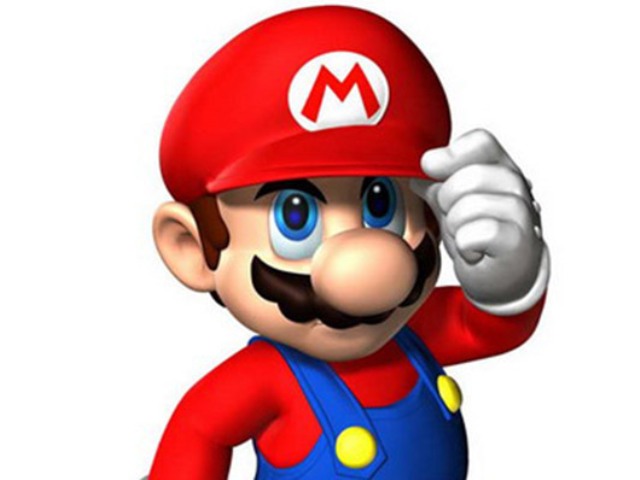
Mario adjusts his cap
On a white background is a three-dimensional bust portrait. Mario wears a red shirt, blue overalls with yellow buttons, and a red cap with the letter M in a white circle. A hand in a white glove touches the visor. Black mustache, a rounded nose, and blue eyes are visible; the hero looks toward the viewer.
The portrait has no level, coins, pipes, or enemies. The volumetric figure noticeably differs from the pixel Mario of the early Super Mario Bros. The specific game for which this render was made is not established. But the isolated figure is convenient for captions: the empty background sets no plot, and the gesture at the cap resembles a greeting or readiness to get to work.
When platformer rules become household rules
The meme logic arises when the conventions of a game are transferred into an environment where they stop being normal. A player routinely gets a coin for hitting a block; in an ordinary apartment, such behavior would look like an attempt to repair the ceiling in the strangest way. The more mundane the new situation, the more noticeable the mismatch between the familiar action and the real result.
Another device is built on repetition. A level assumes that after a failure you can run the same route again, already knowing the dangerous spots. In a household caption, a repeated attempt turns a forgotten umbrella or a badly cooked porridge into a game stage. Mario adds to this small matter the scale of an adventure, although the real challenge takes a few minutes.
A portrait with a raised hand allows an even calmer role: the hero looks like a jumping specialist, ready to comment on a staircase, a high threshold, or a narrow passage. The familiar appearance makes such an assignment understandable at once. What matters is not an exact retelling of one game, but the collision of a stable image with a task that has unexpectedly been handed to him.
Three levels without a console
In a fictional scene, Mario stands next to a photo of a line at a coffee machine. The caption reads: “Collected all the coins, but the boss only accepts cards.” A familiar game resource proves useless in the final challenge. The words about the boss make the machine the level's last opponent, and the change in your pocket the result of a long playthrough.
In the second version, the hero appears beside a sign reading “Elevator out of order.” Beneath it is written: “Today it's another platform where you have to jump on your own.” The exaggeration moves the road home into the platformer genre: the flights of stairs look like the next steps of an adventure, and the gesture at the cap signals readiness to start.
The third joke accompanies a list of household chores: “Cleaned the kitchen. New quest: the kitchen is occupied again.” The author plays with the repetitiveness of levels, where victory opens the next similar stretch of the path. Here Mario turns an endless household cycle into a recognizable game journey, without the need to add a princess, a castle, or a specific enemy to the image.