What is in the picture
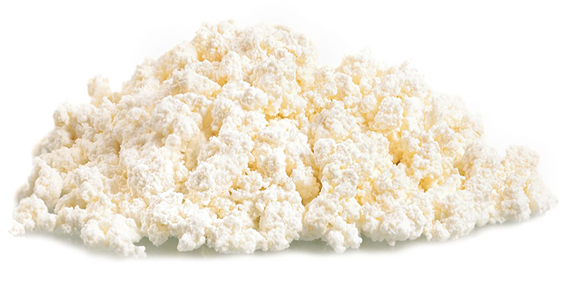
The image is very simple: on a white background lies a neat heap of cottage cheese with small grains and an uneven, crumbly surface. There are no people, no text and no props in the frame; the product is shot on a plain background, like a catalogue photo.
This approach explains why the picture works as a symbol rather than a scene. The meaning comes not from the image but from the phrase: the viewer sees an ordinary product and immediately recalls the argument about how it should be pronounced.
Where the stress argument comes from
The word «творог» is often pronounced with stress on the first syllable, «тво́рог», although the traditional main variant is «творо́г». Both variants are recorded in dictionaries, and the labels depend on the edition and the era, so there is no single final verdict.
That is why the joke rests on ambiguity. One person is sure they know the right variant, and their companion objects that the other one is also acceptable. The phrase «не тво́рог, а творо́г» turns this everyday argument into an absurd loop, in which the same word keeps being corrected again and again.
When the phrase appeared
The origin of this particular formula is not established. The meme is dated to 2019 and linked to its spread on VKontakte, where the same joke was repeated in different communities. Who coined it, and in which group it first appeared, cannot be determined from open sources.
Similar jokes about the pronunciation of this word may well have circulated earlier: the argument over the stress in «творог» has long been part of conversations about how to speak correctly. The exact date of first publication remains unknown, and so does the author; the early example found cannot be considered the proven beginning.
Examples of captions and why they work
Example 1. «— Что на завтрак? — Тво́рог. — Не тво́рог, а творо́г.» (roughly: “What’s for breakfast?” “Cottage cheese.” “Not TVO-rog, but tvo-ROG.”) The first line sounds ordinary; the second flips the meaning with a single shift of stress. The viewer expects a line about food and gets a correction, and it is that unexpected pause that produces the laugh.
Example 2. «Купил творо́г в магазине, продавец поправил ударение, я поправил продавца.» (“I bought tvorog at the store, the seller corrected the stress, and I corrected the seller.”) Here the argument moves to the checkout line. The joke works on contrast: a trifle about pronunciation becomes the reason for a small quarrel.
Example 3. «Мама: купи тво́рог. Я купил тво́рог. Мама: не тво́рог, а творо́г.» (“Mom: buy tvorog. I bought tvorog. Mom: not tvorog, but tvorog.”) The caption builds a short family scene and relies on predictability: anyone who has heard this argument at home recognises the situation at once.
Example 4. «Диктор произнёс „тво́рог“, а я теперь не могу слушать новости.» (“The announcer said ‘tvorog,’ and now I can’t listen to the news.”) The argument moves onto a public stage and turns tension into mild irritation, which is understandable without explanation.
How to use the template
A white heap on a light background suits short captions where one line and one correction are needed. It is better not to overload the picture with long text: the meme holds on a couple of words the viewer should repeat to themselves.
If the joke is shared in messages, it works especially well between acquaintances who know each other’s small habits. A correction instead of an argument keeps the conversation light rather than prickly. Stress marks in the caption help: without them the phrase reads like a typo.