What is in the photo
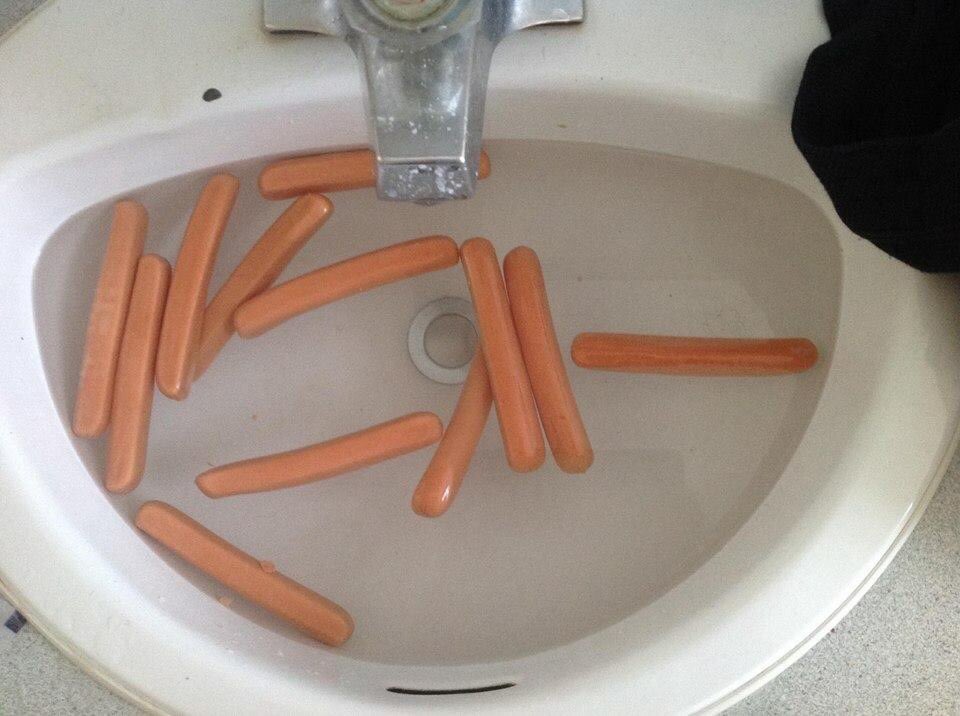
The shot is taken from above. A white sink is filled with water, and about a dozen pinkish-orange sausages lie in it. They are arranged in different positions: several lie almost horizontally, others at an angle, one sits right by the faucet, and one on the right is long and perfectly straight. A metal faucet sticks up at the top, and the drain is visible in the middle. In the upper right corner, part of a dark cloth is visible.
What stands out is that the water is not bubbling but lies perfectly still, and the sausages look as if they were arranged on purpose. There is no obvious meaning in the frame: it is impossible to tell whether they are being cooked, washed, or thawed. That puzzle is the source of the humor.
On a closer look, the sausages lie without packaging and appear whole and even, with no sign of cooking. This strengthens the impression that they were simply placed in the water for the picture. The sink is a very ordinary one, the faucet is an old-style model, and the whole setting looks like someone’s kitchen or bathroom where something has gone off script.
What is known about the origin
Who took the photo, where, and when it first appeared is not known for certain. Retellings with exact dates and the name of a venue should not be trusted: there is no verified confirmation. It is known that the photo spread across Russian-language social networks, and the caption “Swim, sausages” became its established name.
This uncertainty is typical of everyday snapshots: photos are taken for personal use, and the internet invents a life for them. The less context there is, the easier it is to project one’s own meaning onto them.
Why it is funny
The command is what makes it funny. “Swim” is usually said to ships or swimmers, but here it is addressed to food products. The word “sausages” in the address adds a fairy-tale quality, as if they have a will of their own. At the same time the picture is utterly prosaic: sink, faucet, water. The contrast between a solemn order and a mundane frame creates the effect.
The second layer is the complete absence of explanation: the meme does not suggest cooking, washing, or a trick, but simply records an absurd scene—sausages neatly laid out in calm water—and invites a reaction without comment, because there is really nothing to comment on.
Caption examples
“Swim, sausages” — under a message from the boss marked “urgent.” The line seems pointless but conveys a sense of total surrender to circumstances.
“My plans for the year. Swim, sausages” — a joke about plans that float away on their own.
“The fridge after three days with the lady of the house away” — a caption about kitchen chaos.
“When you replied to an email that was not meant for you: swim, sausages” — letting go of an awkward situation.
How to use it
The meme is best used as a reaction: a short phrase without explanation. Trying to explain the joke usually kills it. Captions under the frame should keep a deliberate seriousness, as if you really are giving orders.
Do not invent a dramatic backstory for the photo if it is unknown. The admission “origin unknown” suits such an absurd frame better than any invention.
It works well if the caption answers a question the picture does not pose. For example, you can write only “Swim” and leave the word “sausages” to the viewer’s guesswork. The scene is so strange that any extra comment turns it into a joke about food rather than the pure absurdity for which the picture gets shared.