The head and the bottle
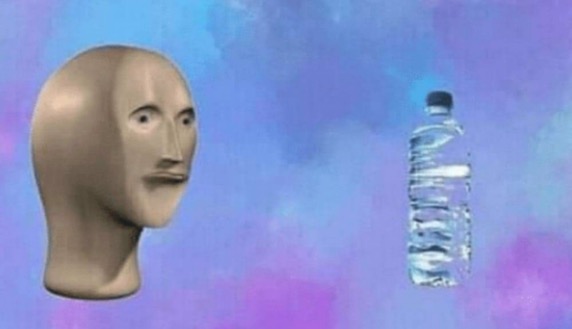
On the left is a large, smooth beige-gray head with no body: an elongated face, wide-open eyes, a small nose, and thin lips. The expression is almost motionless, with a slight surprise. On the right, at eye level, hangs a plastic water bottle, as if floating in the air.
The background is soft and gradient-based, with blue, lilac, and pink patches resembling clouds. It gives the scene the look of an advertisement or a surreal poster. A cold digital model and a mundane bottle are not supposed to share one frame, and it is precisely this tension that provokes a smile.
Who Meme Man is
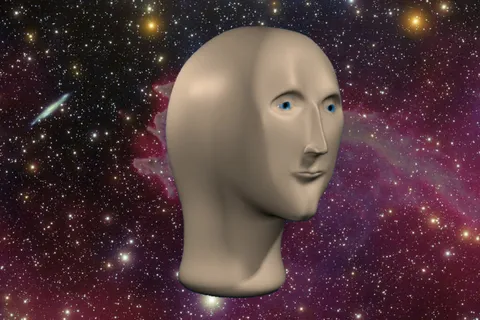
Meme Man is a conventional name for this 3D head: it is not a character with a story, but a recurring image inserted into different jokes. It is associated with surreal, deliberately absurd memes.
Who created the original model is unknown. It therefore cannot be attributed to any particular person: all that is known is that the picture has been used many times in various scenarios.
The first known appearance
The earliest known appearance of this variant dates to April 2, 2019. On that day a Reddit user posted the picture with the caption “Ah yes, enslaved moisture.” The post gathered more than 2,500 points.
Whether this was the very first appearance remains unknown: it is only the earliest example found. The author of the caption and the picture, and whether he came up with the joke himself or repeated someone else’s, have not been established.
Why “Enslaved” Works
The core idea of the formula is that an ordinary object suddenly gains the status of the oppressed. Moisture or water belongs to no one, so the grand word sounds absurd: the speaker treats the bottle as a political situation.
The deadpan model amplifies the effect. The head looks calmly and without emotion, so the claim reads as a plain observation rather than a joke. The template transfers easily to other objects, and the more familiar the object, the stronger the contrast.
Captions in the same logic
1. “Enslaved Monday: it doesn’t want to start either, but it is made to.” A nuisance turns into a small drama, and Monday gets a character.
2. “Enslaved router: restarts every time you ask it for help.” A technical detail is presented as someone else’s will, and the reader recognizes a familiar situation.
3. “Enslaved umbrella: left the house before the rain and now can’t go back.” The object gets a biography, and a specific detail makes the caption precise.
All three captions use the same move: an ordinary object, the word “enslaved,” and a small detail that gives the object character.
How to use the picture
The template suits short jokes about habits and trifles. One line and one detail are enough for a caption. It is best to pick things a person does not cherish and no one seriously worries about, so that the absurdity stays light.
Place the word “enslaved” at the start: it sets the tone, and the reader then imagines for themselves what happened to the object.
Dialogue captions also work well, where the head asks a question and the bottle stays silent. The object’s silence emphasizes that the whole drama exists only in the speaker’s imagination, and the more serious his tone, the funnier the scene looks.