The word and the images
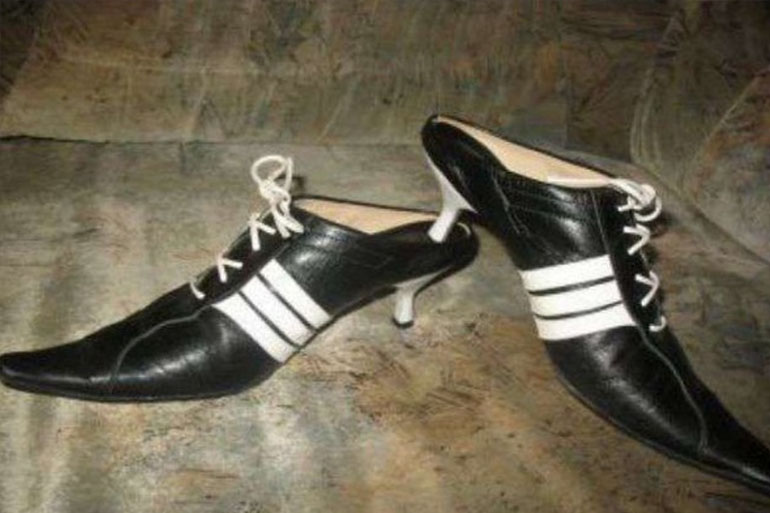
In one local image, black shoes with white stripes and an unusually elongated silhouette are shown. The design looks deliberately bulky and fits the caption "podkraduli" well. Other posts use the word for all sorts of pairs — from cheap sneakers to shoes with showy decoration. There's no single visual standard for the meme.
Claims about the word's exact origin vary. One version holds it's a playful reworking of the English word "sneakers"; another treats it as an independent colloquial word, but there's no reliable linguistic source proving either one. So it's safer to describe current usage: it's a comic nickname for footwear, not an established historical loanword.
How the meme took shape
In short videos, people show off pairs with unusual proportions, old-fashioned details, or flashy trim. First the shoes are presented as an object of astonishment, and then the creator may admit they'd actually like to wear them after all. The contradiction between "this is awful" and "I like it" is the core of the joke.
The exact first video and the moment the word became popular aren't confirmed by a primary archive. Some posts point to early use in the early 2000s; others describe a notable wave of videos in 2023. These may be different stages in the word's and the internet trend's life; they shouldn't be reduced to one proven author or date.
What the expression means
"Podkraduli" isn't simply a synonym for bad shoes. The tone often carries affectionate approval: a funny pair gets its own name and becomes the center of attention. So the word lets people talk about fashion without a serious judgment of quality: a speaker can simultaneously admit the thing is odd and enjoy its individuality.
The format allows for opposite positions. One person finds the shoes tasteless; another sees an expressive silhouette or comfort in them. So the caption may not be about which pair is "correct," but about how one's opinion changes after trying them on. Subjective taste shouldn't be presented as an objective characteristic of the owner.
Examples for posts
"Ordered the plainest sneakers, and got podkraduli with character instead" works well for an unexpected unboxing. "Laughed at them right up until I tried them on" conveys the shift from irony to affection. For a closet video, you could show three pairs in a row and caption the last one: "This is what I actually opened the closet for."
Another short joke: "Dress code: come in whatever's comfortable. I took that a bit too literally." It matters that the humor targets the choice or design of the shoes, not the person wearing them. If the author genuinely likes the pair, that admission can stand — the mix of self-irony and affection is what gives the meme its character.
Another approach is to show how a pair's status changes over several wears: "Day one: what a design. Day ten: where are my beloved podkraduli?" This mini-story explains the word's fondness and adds development even with a single photo. There's no need to judge the purchase by price or brand — the author's unexpected change of heart is enough.
You can show not just the shoe itself but how its owner walks in it: an awkward-looking pair that suddenly looks comfortable in motion, leaving the viewer to decide whether that's funny or endearing. It's a personal impression, not a universal rating of the model.