How a photo acquired a conversation before the haircut
In the mid-2010s, jokes spread on Twitter in which an unusual hairstyle was given an imagined prior conversation. In known early posts from 2014, the client supposedly asked the hairdresser to deliberately ruin the result. The caption turned the strange photo into a small scene: viewers were invited to imagine the order that could have led to such a look.
In 2015, a variant with the reply “Say no more” became noticeable. Among the early posts described is the account FredHymanBurger. The client named an image or a comparison, and the barber immediately promised to understand it without further explanation. These traces show the format's development, although the history of individual photos may have begun earlier and did not coincide with the moment the dialogue was added.
Russian-language versions kept the same short construction. The request could concern a recognizable object, a character or an entire everyday situation, after which the hairstyle became a literal embodiment of a metaphor. The expression has spread beyond hairdressing pictures: it denotes an overly decisive readiness to do something before the details are clarified. It is precisely this premature confidence that links such jokes to the original conversation in the chair.
The hair takes the shape of a headwear item
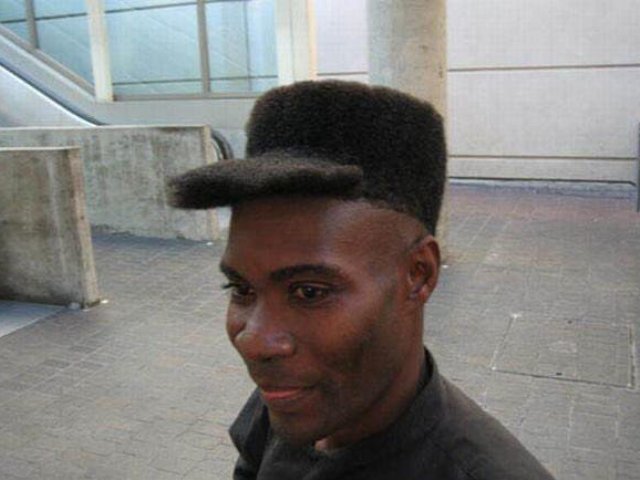
The photo shows a man with tall dark hair. The top of the hair forms a rounded flat shape, and above the forehead a horizontal section juts out, resembling a cap's visor. The side areas of the head are cut short. In the background are tiles, stairs and railings; the man wears dark clothing.
This variant has no dialogue itself and no barber. The man's name, the date of the photo and the actual request to the stylist are not established. But the silhouette provides a ready basis for an imagined request for a cap. The resemblance is built on two parts at once: the large top resembles a crown, and the forward protrusion resembles a visor. That is why the item can be guessed even before any words are added.
Confidence replaces the clarifying question
The ordinary phrase “not a word more” means that the other person has already understood everything. The meme changes the consequences of this promise. The barber seems to understand the request so literally that he skips the difference between the desired style and the physical form of the named item. After the short reply comes a photo that reveals the scale of the misunderstanding.
The dialogue works like a small story with the middle missing. There is no long process of cutting, no argument and no explanation of technique: the order and the confident answer connect straight to the result. The viewer reconstructs the impossible labor between them. Since the real intentions of the person in the photo are unknown, the comic barber and his client exist inside an invented caption rather than inside a proven salon visit.
At the same time, the haircut can look carefully executed. The joke only needs an unusual shape and a fitting comparison; carelessness is not a required condition. In the hair-cap version, the absurdity comes from the literalness of the solution: the request for an accessory is supposedly satisfied in a way that lets the person avoid wearing that accessory at all.
New orders for an overly decisive barber
A new conversation can be invented for this photo: the client complains that he keeps forgetting his cap at home, and the hairdresser replies “Not a word more.” The visor-hair becomes a way to solve the forgetfulness once and for all. The humor lies precisely in the scale of the solution to an ordinary problem: a small household complaint receives a permanent change of silhouette.
In another invented scene, the client asks for a place to charge his phone. After the same confident answer, a drawing of the hairstyle appears with a neat rectangular recess on top. Here the request turns into a furniture project, and the hair takes on the function of a desktop stand. The new picture continues the logic of literally translating words into form.
The third invented order sounds like a request to look like a person who has everything in its place. The imaginary barber makes three horizontal tiers out of hair. The result depicts order as architecture, although the client was talking about character. Such scenes differ in their objects but use the same moment, when the barber's quick confidence deprives the conversation of its last chance for clarification.