The original drawing
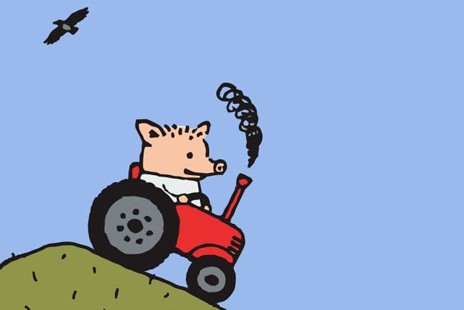
In the image, a piglet in a white shirt and a bow tie sits behind the wheel of a red tractor. The vehicle climbs a green hill under a clear blue sky, dark smoke pours from its exhaust, and a bird flies overhead. The drawing is done in simple flat lines with no extra detail, which is typical of children's book illustrations.
The illustration is taken from a children's book by Lyudmila Petrushevskaya. The exact edition, year of publication, and the illustrator's name are not known. In the book itself, Peter the Piglet is shown as the hero of small stories, and the tractor ride had no political subtext until the picture was reinterpreted on the internet.
Turning into a meme
The decisive push was the appearance of a song and a short cartoon in which Peter the Piglet says goodbye to his homeland and drives off on his tractor. The title of the song and cartoon is built on a crude colloquial phrase urging people to leave the country, which online is referred to by a contemptuous nickname. Because of this, the image quickly came to be seen as a direct comment on emigration sentiment.
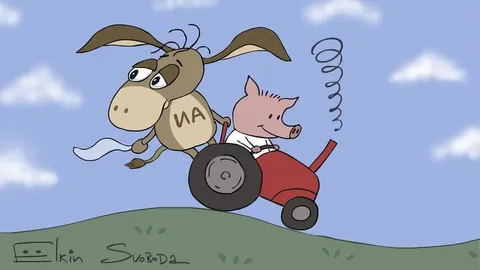
The picture of the tractor began spreading in comments, on forums, and in personal blogs. People used it as a quick response to conversations about relocating, to news that makes one want to leave, or to complaints about everyday and political conditions. One recognizable illustration replaced a long text, which is why the meme quickly became embedded in everyday speech.
Meaning of the meme
The meaning of the meme is tied to the image of fleeing: the piglet isn't just going somewhere, it's escaping on its own vehicle, overcoming an uphill climb. That storyline reads easily without explanation, and the viewer immediately understands it's about the desire to get as far away as possible. That's precisely why the drawing remained popular outside the context of the song and cartoon as well.
In the Russian-speaking internet, the expression "to leave like Peter the Piglet" is used ironically, and it's usually not a call to action but a way to express fatigue and irritation. The meme isn't addressed to specific people and doesn't mock their appearance or actions, which sets it apart from many political pictures where characters are recognizable and become targets for ridicule.
Date and clarifications
The meme dates to 2010, though the exact date the picture was first used online is not established. The song and cartoon that turned the drawing into a meme appeared later than the original book, and their authorship is also not fully established.
The illustration itself remains recognizable apart from politics as well. It's often used in a children's context, in jokes about travel, and in memes about how hard it is to choose a direction. This dual reading is typical of many old children's pictures that unexpectedly take on new meaning in the online environment.