Where the scene came from
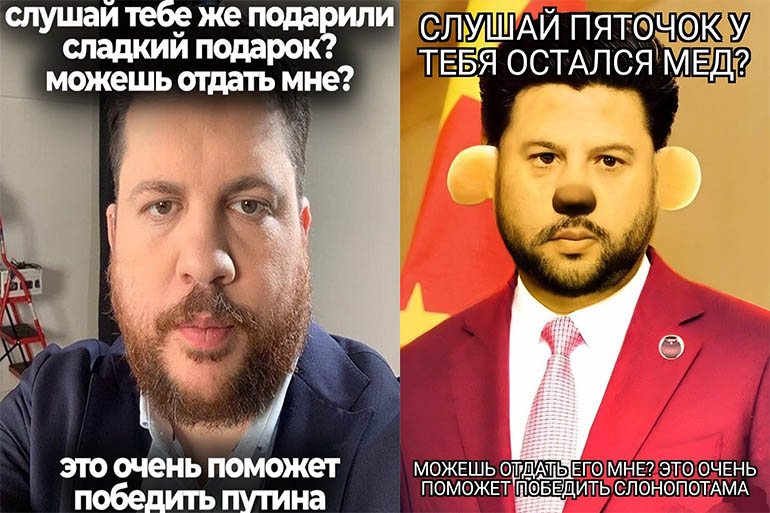
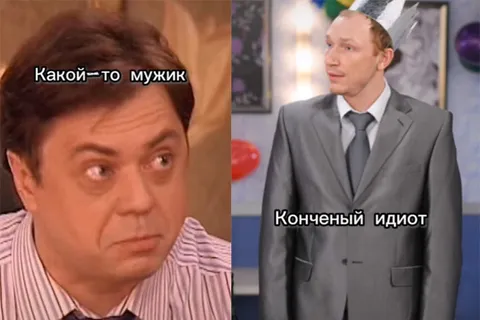
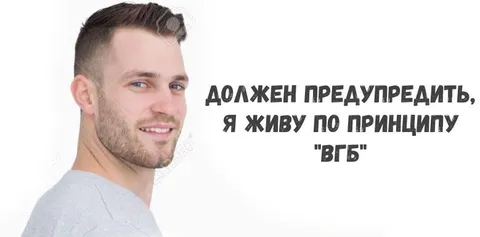
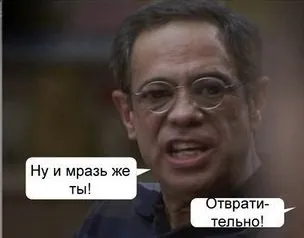
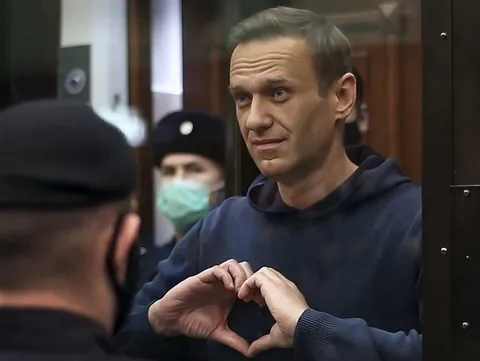
The image consists of two panels with the faces of Leonid Volkov and another public political figure. In the first a question appears about a gifted sweet set, and in the second he's supposedly being asked to hand it over. The caption adds an exaggerated political justification. This is a staged meme scene, not a recording of an actual conversation between Volkov and a child.
In early 2023, accusations circulated online claiming that the Anti-Corruption Foundation had allegedly suggested children take money from their parents. Later memes played on this rumor through an absurd request for candy, juxtaposing a child's gift with a political goal. Available reporting described the accusation as fake; there is no evidence that Volkov actually asked a child for a sweet gift.
How the meme works
The two panels imitate a short dialogue: the first states an ordinary request, the second explains it with an absurdly grand goal. This device gets its laugh from the mismatch in scale — a small gift turns into a resource for "winning" a political struggle. Swapping out the politician or the object creates new parodies.
It's important to distinguish the original false rumor from the satirical response. The request quoted in the meme is an invented construction, not Volkov's confirmed words. The original meme was, among other things, mocking the rumor and its spread, though later variants may have shifted the target of the satire. Without context, a reader might take the phrase as genuine, so an explanation is useful.
Political context and limits
The candy-and-Volkov story shows how a political accusation turns into a joke and then keeps spreading further, already detached from the original fact-check. The satirical version may be criticizing the fake story, its authors, or the political advertising itself — the direction depends on the specific text. A single image doesn't prove what position its creator held.
Since the meme involves children, one shouldn't try to identify the supposed child, spread personal data, or present the fictional scene as fact. Nor should it be used as proof that any organization actually involved minors in illegal activity. Verified claims should be kept separate from the satirical retelling.
Examples of safe adaptation
For an office chat: "Hey, didn't you get given paper clips? Share some? It'll help finish the report before the deadline." Here a small object becomes disproportionately important. For a family conversation: "Didn't you get given cookies? Send one over to the evening-rescue headquarters." Political names can be replaced with fictional characters so as not to create a false impression about real people.
The format also works for parodying a grand promise: "This candy is needed for a historic boost to the department's mood." If the meme is posted in a political discussion, note that the dialogue is fictional and mocks the rumor. That keeps the humor while not leaving the reader guessing whether the scene was actually recorded.
The safest adaptation keeps the child's item and the excessive justification but swaps the political goal for a fictional one: "This candy will help finish the board game before midnight." That way the viewer gets the structure without mistaking it for a claim about a real campaign or a politician's actual request.
For a neutral version, it's better to drop any mention of parties and real politicians: the joke rests on the mismatch between the request and the explanation. You can also explicitly flag it as a parody if the post ends up in a feed where the reader hasn't seen the original discussions.