The joke
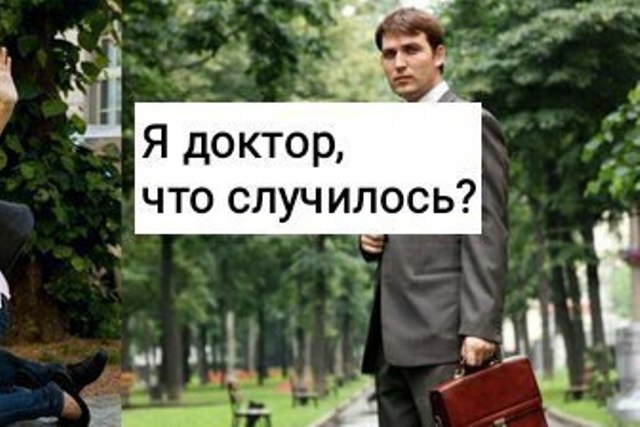
“I'm a doctor, what happened?” is a caption for a scenario in which a woman calls for a doctor to help a dying man. A passerby responds that he is a doctor. When he is told the situation and asked for help, he clarifies that he is a doctor of technical, historical, or any other sciences, and cannot help.
The comedy rests on the mismatch of the word “doctor”: in everyday usage it means a physician, but the passerby uses it in the sense of an academic degree. This shift makes the line understandable without further explanation.
Origin
The author and first publication of the meme are not established. A search by the phrase and plot description found no sources describing the comic's creation, the date of first publication, or the platform where it first became popular. The material found concerned other topics, such as humor about medicine or author comics, and did not relate to this meme.
The catalog lists 2017. This date is given as a reference point from the catalog, not as a confirmed fact.
Why it became popular
The joke belongs to a type of play on the literal reading of a word. This device is easy to repeat, so the phrase transfers readily to other situations: it is used when a person takes on a task they don't understand, or when someone formally holds a title but cannot help in practice.
The simple structure of a question followed by a clarification keeps the meme short. It can be understood at a glance, which is why it is easily reproduced in comments and messages.
Image and caveat
The catalog describes the plot as a comic, but the saved file shows a photograph: a man in a business suit with a briefcase stands in a park against greenery, and along the left edge of the frame a person lying on the ground is visible. The caption “I'm a doctor, what happened?” is set in a white block over the photo.
The image matches the general idea of the meme but not its described format. This discrepancy is stated directly, and the plot in the article is presented based on catalog data, not on the visual material.
Format and spread
Captioned photos that are reworked for new situations make up a significant share of Russian-language memes. The version with text over the frame is convenient for posting on social networks and messengers, since it keeps its meaning even without context.
The meme is most often found in comments, where it is used as an ironic response to a request for help or to a claim of competence. Such use cements the phrase as a ready-made template for similar situations.
Conclusion
The meme shows how a conflict between the meanings of one word turns into a lasting joke. Without a confirmed source it is impossible to name the author or exact date, but the plot is recognizable from the description and the image and needs no explanation for an audience familiar with Russian-language internet jokes.