A frame that is hard to make out
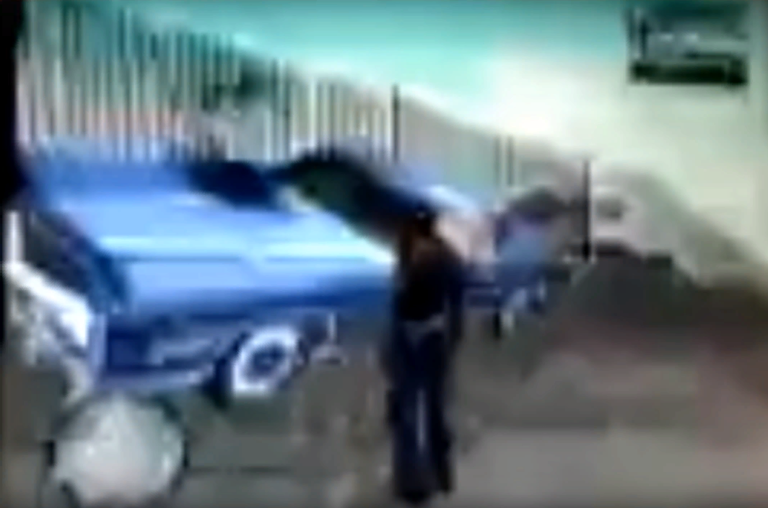
The picture is low quality: a blurred color image. On the left and in the center a blue car with a white wheel disc is visible; in the background is a light wall with vertical stripes. In front of the car stands a dark figure, and in the corners game interface elements are noticeable: a round map at the bottom left and a plaque in the upper right corner.
Details like these point to a frame from a computer game rather than footage of a real street. The game cannot be confidently named from the image itself, so it should be treated as a backdrop for the caption rather than as an illustration of a specific plot.
The phrase that became a template
The main part of the meme is the text of gratitude. The speaker solemnly says “thanks, Pops” for the car, and all the irony is built on this pathos. The car's name is written distortedly: “Renovo Vogan” resembles an inexact rendering of the name of a real model. The distortion is preserved because it has become a recognizable part of the template.
The phrase “of the black color of the twentieth century” adds a comic note: it sounds like a clumsy attempt to express oneself formally, while in the picture the car is actually blue. The mismatch between the phrase and the frame makes the joke more noticeable.
What is known about the origin
The source of the phrase is not established. There are retellings of an amateur video with in-game commentary, but the author, platform, date and even the game itself are not confirmed in reliable materials. Retellings also disagree on the years of its appearance and mass spread, so a specific date cannot be named.
Overall, one can reliably say only that the phrase has taken hold as an independent template: it is captioned under pictures of cars and people standing next to them. It is better not to discuss or search for who said these words: the joke lives without being tied to a specific person.
Examples of captions
Example 1: “Thanks, Pops, for giving me this twentieth-century ‘Renovo Vogan.’” This is the original structure of the template, and it works through a formal tone: the gratitude sounds solemn while the object looks modest.
Example 2: “Thanks, colleague, for leaving me this report for Friday.” The same construction is transferred to an unpleasant office task, and the contrast between a polite phrase and a heavy gift makes the joke understood immediately.
Example 3: “Thanks, neighbor, for this renovation at seven on a Sunday morning.” Deliberate politeness turns an everyday nuisance into a solemn event.
All three captions rest on the same mechanism: first a polite thanks, then it turns out the gift is dubious. The pause between the word “thanks” and the description of the item creates the comedy, which is why the template transfers easily to situations where the gift looks strange.
How to apply the template
The template is convenient for irony about things and situations. It is better to build captions around a car, an object or an everyday situation, rather than around the appearance or identity of a real person. That keeps the joke harmless.
To describe the picture, it is enough to say that it is a blurred frame from a game with a blue car, and that the origin of the phrase is not established. Such wording honestly conveys what is visible and does not pass assumptions off as facts. If you want to strengthen the effect, make the caption long and ornate rather than short: the pathos is the basis of the joke.