An ad where destruction became a spectacle
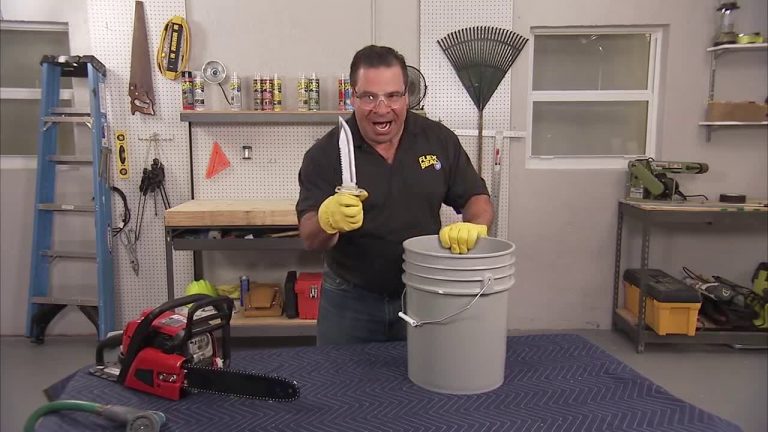
Phil Swift is the recognizable face of Flex Seal, hosting product demonstrations for sealing and repair products. In a video published in June 2015, he damages a bucket with a knife and a chainsaw. Within the ad’s story this is the setup for the main act: showing how the product handles the resulting holes. However, viewers may be more drawn to the person who gladly stages such a loud test.
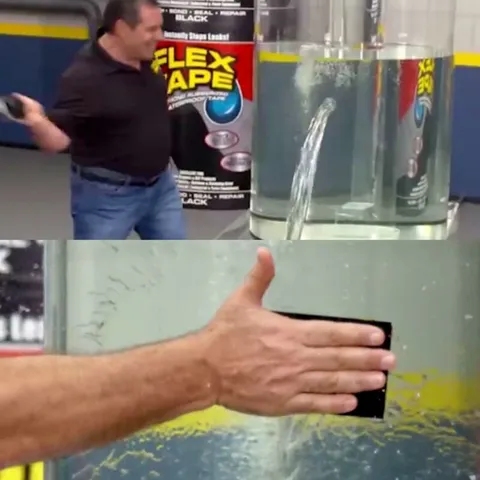
This episode should be kept separate from the later Flex Tape ad featuring a boat sawn in half, released in January 2017. Both demonstrations involve Swift, but the products and videos differ. In summer 2017 his advertising manner was parodied in video remixes, and in the fall JonTron discussed it. A PewDiePie review in June 2018 helped fuel a new wave of jokes. The line’s popularity built up through several returns of the ads to the internet.
What the bucket frame shows
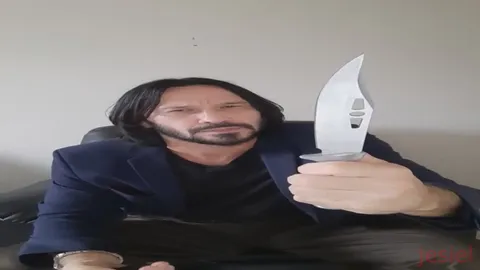
In this picture Swift stands behind a workbench in a workshop. He wears a black polo shirt, glasses, and bright yellow gloves. A long knife is held upright; nearby is a gray bucket, and at the bottom of the frame lies a red-and-black chainsaw. In the background are a window, a ladder, and tools. There is no boat here, nor a meme line printed over the image.
The knife, the saw, and the neatly prepared setup create comic solemnity: an ordinary bucket has received an overly impressive set of opponents. At the same time, the still does not show the full result of the test. It works as a promise of actions the viewer already knows from the ad, or as a portrait of an overly enthusiastic destroyer. Even without the familiar phrase, the combination of an everyday object and a deliberately raised tool sets the scale of the joke to come.
How the line changes its meaning
In the ad, words about enormous damage are meant to raise the value of the subsequent repair: the more serious the problem, the more impressive the proposed solution. In a meme this link usually breaks off after the damage assessment. Swift becomes a commentator on failure, and the promised help may not appear at all. The English phrase roughly means “now that’s some damage”; its force lies in a confident, almost festive tone.
Both a literal match and a disproportion can be funny. A broken object really does deserve an exclamation, and a single chipped corner makes the reaction deliberately exaggerated. Sometimes the damage is not even material: a clumsy line has wrecked a lovely presentation or exposed the weakness of an argument. Then the repair vocabulary of the ad is transferred to reputation, plans, and mood. The frame with the knife additionally hints that the hero may have caused the problem himself, which he now so cheerfully assesses.
New situations for this reaction
One invented example: a perfectly decorated cake on which the birthday person accidentally smeared a single letter. The caption “Expert assessing the aftermath” and Swift turn a small flaw into a major investigation. Here the joke rests on the gap between the size of the defect and the seriousness of the reaction presented, and the host’s festive tone makes it even more noticeable.
Another variant: a person promises to neatly cut a text down to one page, and after editing only the title remains. The raised knife becomes a metaphor for excessive diligence. A third scenario: a team prepared a spectacular stage entrance, but the music started half a second early. The line about damage assesses the ruined dramatic moment. In all three cases the character of the ad is preserved: a confident specialist examines the consequences of an action that turned out to be far more energetic than needed.