What's shown in the picture
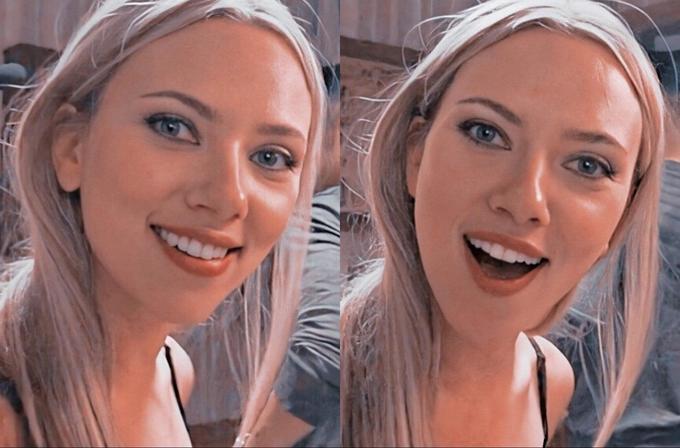
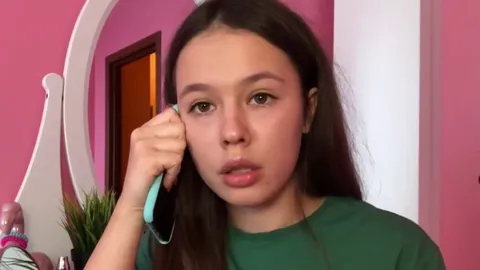
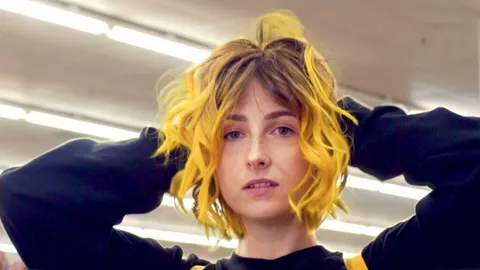
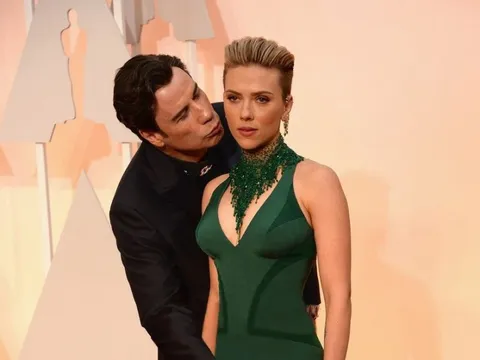
The image is made up of two adjacent vertical frames shot from almost the same angle. Each is a close-up of a woman's face with long straight blonde hair, light-colored eyes, and the warm, slightly muted color grading typical of fan edits. On the left she's smiling, showing her teeth, her head tilted slightly. On the right her mouth is open even wider, her eyebrows raised: it looks as if she's speaking or shouting.
Based on the meme's name, the woman is believed to be Scarlett Johansson. The frame itself contains no captions or other markers that would make it possible to identify which interview, film, or video it's taken from, so its source remains unconfirmed.
What's known about its origin
There's no confirmed data about when exactly this pair of frames first appeared. It looks like both images are stills from a single video clip, paired up vertically and color-graded. Such paired collages are often made in fan communities and then make their way into general meme collections without any credit to the original source.
So it makes more sense to talk about this template as a universal reaction than as the story of a specific episode from a well-known actress's life. The meme doesn't reveal anything about her attitude toward anything, nor her mood at the time of filming: the emotions in the frames can't be taken as evidence of real feelings.
How the joke is built
The two adjacent frames read like a short story: on the left the woman smiles calmly, on the right her mouth is open and her eyebrows are raised — the viewer fills in for themselves what happened between those two seconds, and the explanation is left to the caption.
The main strength of this reaction is its ambivalence. The open mouth and raised eyebrows on the right can be read as a joyful squeal, as mild shock, or as "oh, really?" That's why the meme works equally well for good news and for a conversation partner's absurd confession.
Both frames also look friendly. There's no anger or mockery here, and the picture is safe to send in private messages: it doesn't come across as a reproach.
Example captions
Two-frame templates usually get captions in a "before" and "after" format. Here are some made-up examples.
Left: "A friend suggests going to a café." Right: "She's paying." The pleasant surprise in the second frame amplifies the effect.
Left: "Opening tomorrow's schedule." Right: "The first two classes are cancelled." A small thing that a student experiences as a tiny miracle.
Left: "Listening to a coworker's story about their weekend." Right: "He went skydiving." Here the second frame responds to the twist in the story.
Left: "Reading a product description." Right: "Shipping is free." A simple comparison where the reaction is built on a modest trigger.
Tips for using it
Use the template in situations that have two moments: anticipation and an unexpected result. If the message is about just one event, the picture will feel excessive. Short captions read better than long ones, because the viewer's eye goes straight to the faces.
Remember that these are photos of a real person. Don't attribute words or opinions to her that she never said, and don't use the frames in captions that demean her or put her in an unflattering light. A light, everyday irony is more than enough for a good joke.