What is visible in the photo
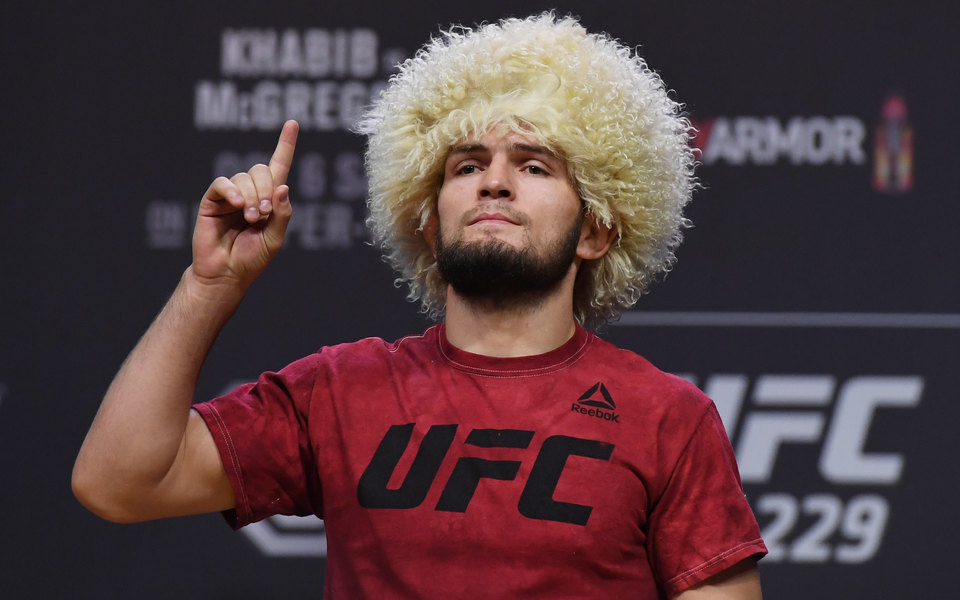
The picture shows a man in a fluffy light hat made of curls, looking at the camera with a serious expression; his right hand is raised, with the index finger pointing up. He wears a red T-shirt with the UFC logo and the Reebok brand. Behind him is a dark board with inscriptions: in the upper left corner one can read "KHABIB McGREGOR," on the right "ARMOR," and at the bottom fragments of "UFC" and the number "229" are visible.
The frame resembles a photo from a pre-fight event: the background points to the UFC 229 tournament and Nurmagomedov's fight with McGregor. The subject's name is identified from the inscription and from the meme itself. There is no scene or text about the show in the photo, so the link between the picture and the jokes about criticism rests on a recognizable image rather than on the content of the frame.
What happened in February 2019
The reason for the format is usually attributed to the story of the touring stage play "Hunting Men," which has been touring Russia. It was staged in Makhachkala on February 23, 2019, at the "House of Friendship." A fragment of the performance spread on social media on February 25, and that evening Nurmagomedov publicly called what was happening unacceptable for Dagestan.
On the morning of February 26, he spoke out even harder: he demanded that the organizers be punished according to the law and apologize. The actors of the show later apologized. The date of the first "Khabib criticized..." joke and its author are not established, so the link between the format and this episode remains a hypothesis rather than a proven fact.
Where such text jokes come from
The format is built on a simple device: a short phrase attributes to a well-known person an opinion on a topic in which they are not an expert. The text is set apart from the picture or placed on a plain background, so the reader immediately understands it is fiction. The humor comes from the combination: a fighter whose name is tied to the ring pronounces judgment on art, cooking, or technology, and it sticks in the memory.
It is important to distinguish a joke from a biography. A caption that the hero never actually said describes an image from memes, not the person. That's why such texts should be perceived as a genre, not as documentary statements by an athlete.
Caption examples and how they work
Below are four invented examples in the same style. These are not real statements.
"Khabib criticized the new borscht: there's too little fighting in it." The shift from the kitchen to sport turns an everyday dish into a subject of dispute, and sports vocabulary sounds serious.
"Khabib criticized the contemporary art exhibition: the paintings can't survive three rounds." The joke transfers a sporting measure of evaluation to art; what's funny is the confidence with which the hero judges by his own rules.
"Khabib criticized the weather forecast: the rain is too weak for a serious conversation." The absurd seriousness of the tone, which doesn't match the topic, does the work.
"Khabib criticized the accounting software: there's no 'take revenge' button." The image merges with a dull interface. The more specific the object of criticism, the stronger the mismatch.
How to read and use such captions
If a caption concerns a real public figure, it's worth remembering that the phrase is not his statement. For jokes about sports and topics far from it, it is enough to understand that this is a genre device. A fictional quote should not be carried over into news or used to attribute motives to the hero.
A photo with a raised finger suits such captions best, because the gesture looks like a "final word." It's better to keep the text short and make the reason for the joke clear without external context.