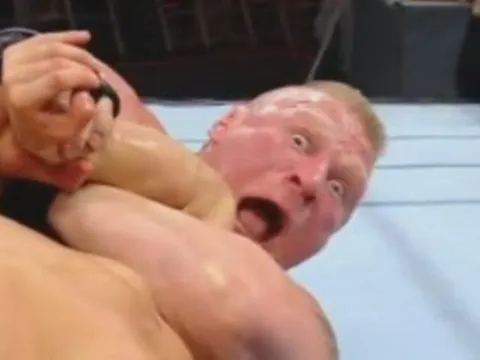
A moment from a big fight
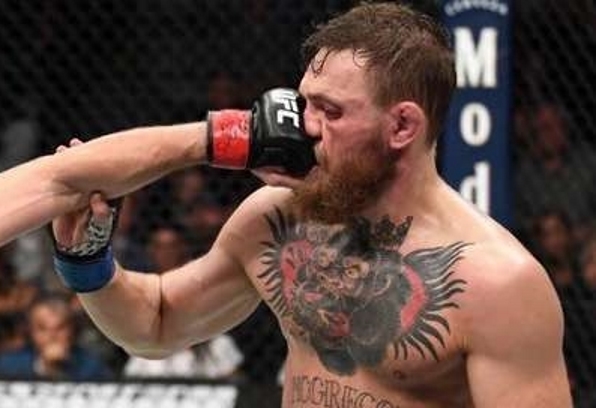
UFC 229 took place on October 6, 2018, at T-Mobile Arena in Las Vegas: Khabib Nurmagomedov and Conor McGregor contested the lightweight title. In the photo, Nurmagomedov lands a blow inside the octagon; the cage and the spectators in the background preserve the atmosphere of a sports arena. This is a real moment from the fight, not a staged scene.
The photo freezes the exchange of blows at the moment the glove meets the face. Both fighters keep their hands raised, so the frame captures the action rather than an obvious finish. The bout later ended in the fourth round with a submission by Nurmagomedov. The difference between the vivid moment and the official result matters for reading the memes: a caption can turn this blow into a symbol of victory, even though the fight itself ended differently.
From the fight to the meme feed
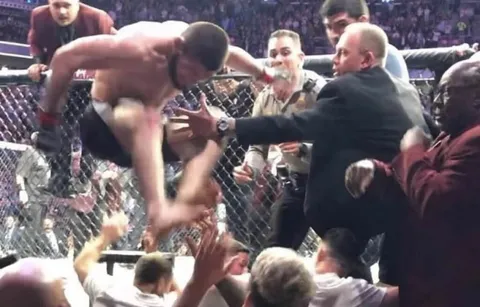
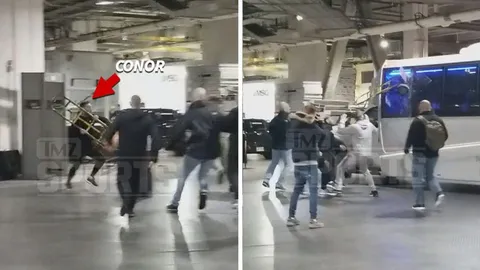
As early as October 7, user posts were turning the events of UFC 229 into jokes. The discussion combined the bout itself with the brawl that broke out afterward: Nurmagomedov climbed over the barrier toward members of the opponent’s team. In one post, his leap was compared to the arrival of a new Spider-Man. In this way the meme reaction spread across different episodes of the evening, not only the blow to McGregor.
A picture with the glove at the face works differently from jokes about the leap over the barrier. It already contains two opponents and a visible collision, so a caption can assign the roles directly between the fighters. For a viewer who remembers the tournament, the photo remains a sporting memory; for others, it becomes a stand-alone image of a sudden advantage for one side. The image keeps its meaning even without neighboring frames.
Why the frozen blow works
The frame is easy to read without knowing the rules of MMA: the blow defines which side seizes the initiative. In a meme caption, this moment becomes an image of a resolute advantage. One character or object can take the role of the attacker, while another ends up on the side that was cut off or stopped, and the text states what the conflict is about. In this way the sporting motion turns into a visual response: “interrupted,” “won,” “case closed.”
Inside the frame, the opponents occupy opposite sides, and the glove joins them into one short diagonal. That is why the words can be placed directly beside the fist and the face: the caption marks the acting force and the one who meets it. Instead of a separate line under a photo, you get a small diagram of the conflict, in which the position of the text matters as much as its wording.
Invented captions
An invented example: on the fist, “One more episode”; on McGregor, “I’m going to bed early.” Two habits become rivals, and the picture shows how the promise to keep a routine once again gives way to the desire to keep watching. The captions assign the roles, so the viewer does not have to guess which side won the everyday argument.
Another fictional variant: “Checking the formulas” against “My finished report.” The blow marks the second when one mistake cancels confidence in completed work. Here the suddenness of the sporting moment is preserved, but instead of athletes, expectation of a quick result collides with the need to recalculate everything.