A mirror that shows desire
In “Harry Potter and the Philosopher's Stone,” the magic mirror shows not an ordinary reflection but the deepest desire of the person looking into it. In the novel, Harry sees his parents and other relatives in it; in the film adaptation, he sees his parents. This is not a promise to bring them back but a visual image of his longing for family. Such a vision comforts, yet it becomes dangerous if a person cannot tear themselves away from an unreachable dream. The meme takes an easily recognizable rule of magic and frees it from the dramatic plot. Instead of parents, the mirror can show a new season, a favorite game, a vacation, or a snack that has vanished from store shelves.
From a film still to a viewer's desire
One of the early well-known examples appeared on Reddit on June 27, 2015: in the mirror, a person sees the fourth season of “Sherlock.” This caption turned the rule from the film into a current fan wish; in 2018, similar variants appeared again in online communities. The occasion changed along with viewers' expectations: a new season, a sequel to a game, or the return of a popular character. The expectations of the time also become part of the joke: the viewer sees the movie screen for a moment replace the premiere calendar and recognizes the familiar impatience of a fan.
What the frame shows
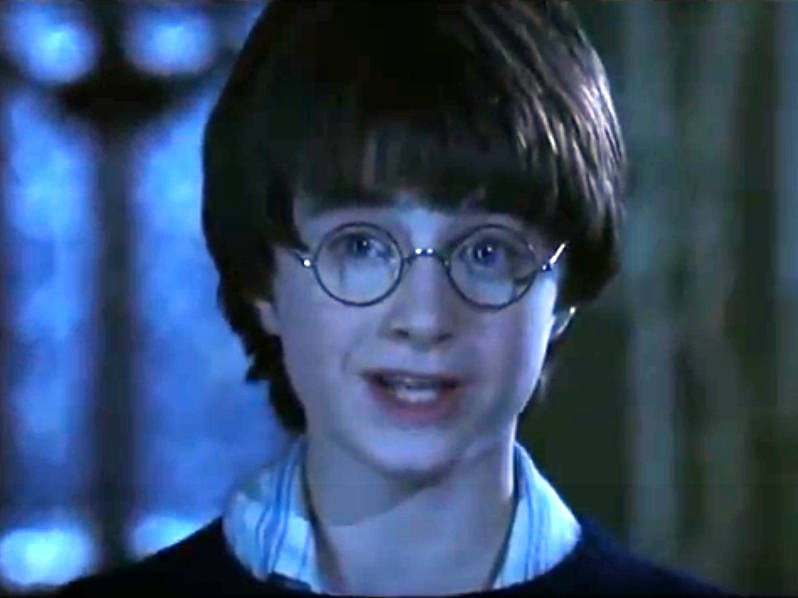
The image is a close-up of Harry in round glasses against a blue glow. The mirror itself and its reflection are not in the frame, so the link to the meme is made by the well-known scene and the caption, not by an object visible in this picture. The hero's mouth is slightly open: an expression of anticipation or surprise, which makes it easy to layer someone else's desire on top. In the full episode, the contrast between a child seeing his family for the first time and an adult who understands the cost of such a vision works even more strongly. The meme keeps the first half, the enchanted viewer before a miracle, and changes the object of the dream. Depending on the caption, the tone can become touching, fannish, or deliberately down-to-earth.
Invented desires
The invented caption “The mirror shows: an email saying 'contract approved'” turns magic into practical relief; the wish is specific because the wait for a reply has already dragged on. Another invented variant: a cook sees not fame but a whole free evening without sudden orders, which is everyday peace instead of a grand dream. One can also imagine a student before an exam, to whom the mirror shows that he remembers the material exactly when the professor asks a question. Here the desire is tied not to magical talent but to the moment when anxiety recedes. These examples do not quote early memes; they show the range of the format: sincere hope, a recognizable fan dream, or a small irony about how much effort an ordinary day takes.