A silent frame with a recognizable scream
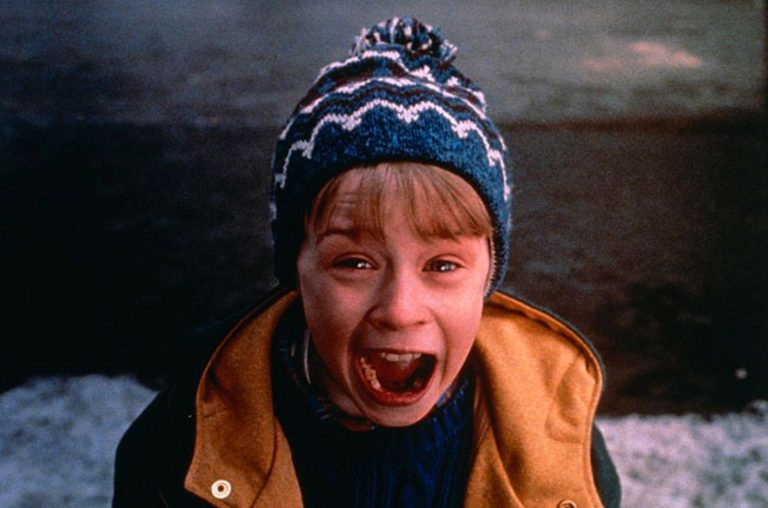
The image shows Kevin McCallister, played by Macaulay Culkin, standing outdoors in winter clothes. He wears a blue knit hat with a pompom and a light pattern, a light brown jacket, and a dark scarf. His mouth is wide open, and snow is visible at the bottom. It is an emotional close-up in which all attention goes to the face and the moment of the scream.
The frame comes from Home Alone, a 1990 comedy directed by Chris Columbus from a script by John Hughes. In the plot, a family accidentally leaves Kevin at home during a trip, and the boy has to cope with unexpected independence. For the meme, Culkin’s familiar performance matters: viewers easily recall how his fright sounds, even when there is no working video player in front of them.
The film has several famous screams, and their images differ. Here the hero is in a hat outdoors; the familiar portrait with hands at the cheeks after aftershave looks different. The shared caption about a picture you can hear groups such examples by mechanics, but each frame evokes its own specific memory.
A phrase that attached to many images
English variants of the call to repost an image if the viewer can hear it appeared on Twitter as early as 2014. One well-known early trace is dated July 29, but the attached image later disappeared. That autumn the caption accompanied a photo of rapper Meek Mill, and in 2015 users invited people to recall the sound of the THX logo.
These examples show the format was open from the start: the main condition was a stable link between picture and sound. A new prominent wave came in March 2018. Among the frames being shared was Chris Tucker from The Fifth Element, and other recognizable characters and on-screen title cards appeared alongside. The Russian word for retweet (“ретвит”) keeps the link to Twitter’s habit of resharing someone else’s post.
The Kevin frame fit well into this family of jokes: a familiar film scene became an invitation to share one’s own recognition. Decades passed between the comedy’s release and the caption’s spread, yet the hero’s voice remained recognizable to viewers who kept encountering him on television and in holiday screenings.
Memory completes the photograph
The format uses a simple missing piece: there is an image, but no soundtrack. If a person remembers the scene, they mentally finish it, and the retweet call becomes confirmation of “I know this too.” As a result, what is funny is the experience of recognition itself. A long explanation of the line usually weakens the effect, since it tells the viewer what they should remember on their own.
Such a meme also helps people find others with similar memories. Some recognize a movie character’s voice, others a short signal from an old program or a game’s title-screen melody. The answers can differ: even a similar picture reminds each person of a different sound. In this way, the replies in the comments turn into a conversation about which films, shows, and games stuck with different people.
What sounds can be invented for the joke
In a made-up example, friends share a photo of plastic dominoes falling off a table. The caption asks people to recognize the picture by ear. Those who regularly gathered for this game recall the distinctive clatter and the argument about who brushed the edge again.
Another invented variant is a photo of an office keyboard with one especially loud key. Colleagues only need to see it to imagine the sound of a neighbor’s morning messages. The recognition here rests on the shared experience of a small team, so the image stands in for an inside joke.
In a third invented situation, hiking companions send a photo of a kettle over a campfire and invite others to hear the moment the water finally boils. This is a calm version of the mechanic: instead of a hero’s frightened scream, the picture evokes a pleasant memory of a sound everyone was waiting for.