Format
A classic advice animal consists of three elements: a photo of an animal or character in the center, a top line, and a bottom line. The top text usually sets up a situation or a question, while the bottom one contains the advice, an ironic conclusion, or an unexpected line. The background is often bright and solid-colored, which makes the picture recognizable at a glance.
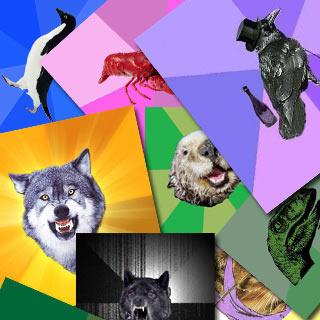
The featured set shows characters typical of the genre: a wolf on an orange background with sun rays, a penguin mid-leap, a lobster, a dog, and other animals on brightly colored surfaces. This set shows that the category united different images, with the common thread being not a specific character but the caption format itself.
Origin
The genre emerged in English-language internet communities around the late 2000s, when forums and communities on Reddit and 4chan began mass-producing pictures of advice from animals. One of the first and best-known characters in this line is a dog with captions about life situations, commonly referred to as Advice Dog.
Better-known variants, in which the advice-giver is Courage Wolf, a penguin, and other characters, appeared later and quickly joined the genre's shared catalog. The exact authors and dates of the first publications are often disputed, so the format's history should be considered approximate.
The Russian-language adaptation
In the Russian-language internet, the format was named "edvaisy" (from "advice") and began being used for original captions: local lines, everyday advice, and quotes from popular films were written into the texts. The word caught on as a label for the whole category of pictures, even when the specific characters were foreign.
The Russian version often emphasized the absurd logic of the advice: the animal seriously proposes a solution to something obviously trivial, while the caption underscores the comedy of the situation. This device made it possible to joke about habits, everyday life, and simple human blunders without targeting anyone specific.
Development and spread
The format spread quickly across social media and messengers, because the template is simple and requires no editing skills. It's enough to pick a photo, a colored background, and two captions to get a finished meme. Thanks to this, advice animals became one of the first mass macro formats.
Over time, the genre spawned many analogues and parodies, and some characters turned into standalone memes used without the original caption. Many of them entered the lexicon of internet culture as markers of a certain type of humor.
Significance and conclusion
Advice animals show how a visual language forms online: a recognizable frame, a clear format, and a ready-made set of images. Even without knowing the original source, a viewer understands they're looking at ironic advice rather than a serious recommendation.
Exact dates for individual pictures and the names of their authors are not confirmed in open sources, so the text gives only general information about the genre and its development. What matters for the reader is understanding the mechanism: a serious pose, absurd advice, and the contrast between the two captions. That's exactly why the format has survived several waves of popularity and remains recognizable today.