An old song in a new internet context
"Symphony" is a song by Clean Bandit featuring Zara Larsson, released in 2017. Seven years later the track unexpectedly returned in short videos alongside multicolored dolphins, rainbows, and a deliberately cheerful aesthetic. The viral wave peaked in August 2024, when users laid phrases about burnout, money trouble, breakups, or plain tiredness over the glowing scenery.
The trend needs no single caption or storyline. Its mechanism is to set a grand musical sound and a colorful picture against a down-to-earth confession. In one video that might be a joke about the end of a vacation, in another about a bad purchase. The sad content is not necessarily a real message about a crisis: often it is just a way to give an everyday problem a theatrical delivery.
What the card shows
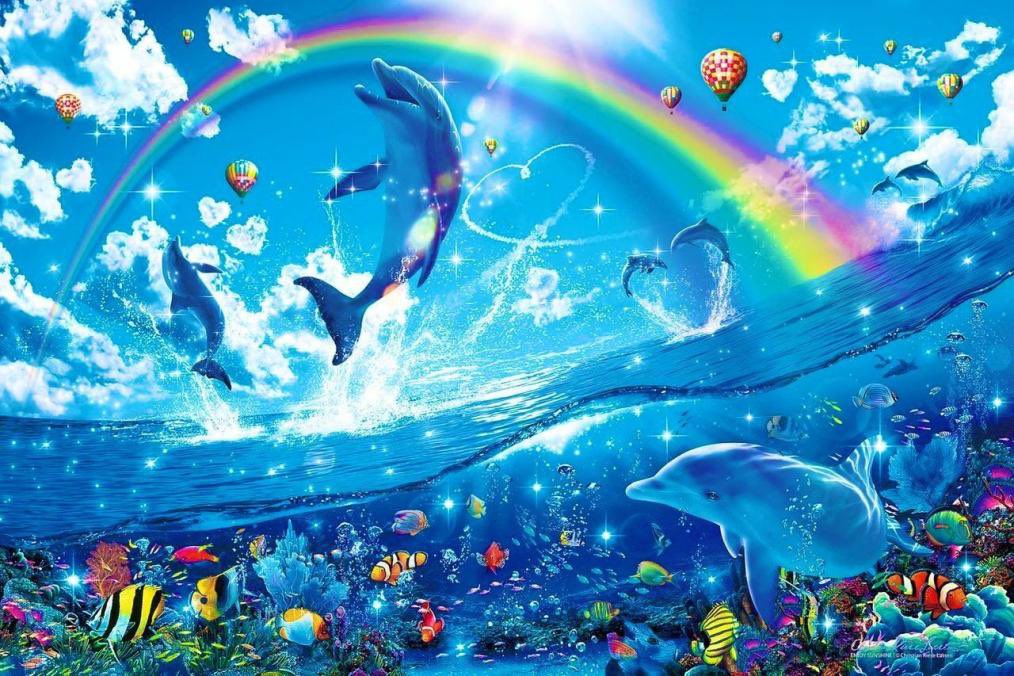
A dolphin leaps out of the water against a rainbow, clouds, and a fantastically bright landscape. This is a digital, postcard-style composition, not a photo of a real animal or a film still. A few decorative elements create a sense of fairy-tale well-being. It is this carefree, almost over-the-top cheerful image that leaves room for a gloomy or weary caption.
Different posts used different backgrounds, and the origin of one particular version cannot automatically be applied to another. Some images may have been made with digital tools, but you should not claim without checking that a given file is AI-generated. To explain the meme mechanic, the visible features are enough: rainbow water, a leaping dolphin, and a bright decorative aesthetic.
Why the mismatch of tones is funny
A positive image usually goes with an uplifting text. Here the order is reversed: the brighter the dolphin and the grander the music, the more a dry confession such as "opened the calendar and realized the weekend is over" stands out. The contrast does not make real hardship funny in itself; it works best with small, familiar letdowns that viewers recognize from their own lives.
The chorus of "Symphony" helps pull the clip together. It has a noticeable musical lift, so even without a detailed caption it feels like a big emotional gesture. When a small annoyance sits on top of that sound, the scale becomes comic. The clip turns into a miniature performance: viewers are first shown near-cosmic joy and then brought back down to earth with a single line.
How to make your own version
Start with an ordinary joyful image, then add an honest everyday confession: "got my paycheck, opened the banking app, remembered the bills." Or: "planned the perfect vacation, and the rain started the day I flew out." A good caption is specific and short. Write a whole paragraph and the contrast is lost, and viewers have to read an explanation instead of catching the sudden turn.
Another way is to play with expectation: "I decided to rest without my phone. My phone reminded me of five tasks." The first part matches the picture, and the last part breaks the promise of harmony. You don't need to copy the original image pixel for pixel; it is enough to keep the clear pair of "bright hope, everyday correction."
Where self-irony ends
This approach suits mild tiredness, small failures, and gentle self-deprecation. If the text is about illness, loss, violence, or a serious crisis, the rainbow backdrop can look too flippant and hurt someone who is going through it for real. Consider who will read it, especially if your post is a reply to a personal message rather than a joke about your own experience.
Do not use the meme to present someone else's anxiety as absurd or to tell a person to "look on the bright side." In the first person it reads as a confession: I can see the gap between the pretty plan and reality. In a reply to someone else, the same picture can feel dismissive. The context and caption should make clear what exactly the author is laughing at.