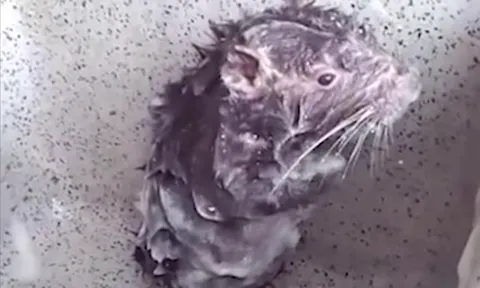
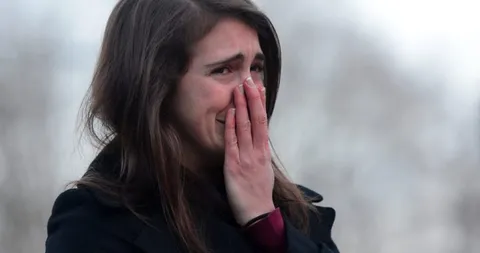
What's in the frame
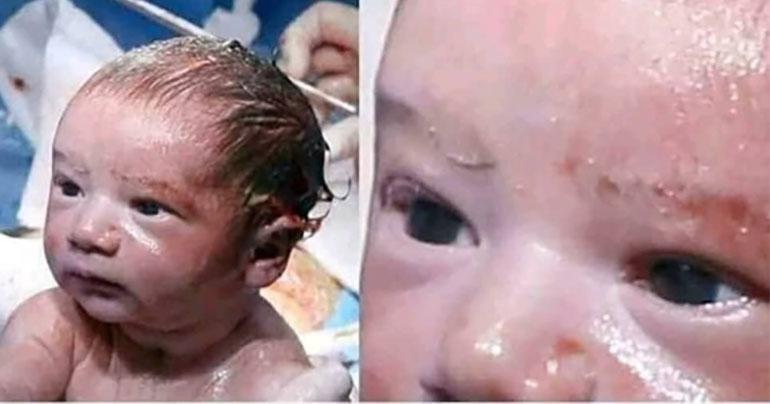
The picture has two parts. On the left is a newborn with wet dark hair, looking off to the side, brows tense, the face appearing thoughtful or displeased. At the edge of the frame is a medical wrap and someone's gloved hand. On the right is the same baby even closer up: the eyes, damp skin, and marks from the birth are visible.
This isn't four panels: only the pair of shots survived, and it becomes four panels when a user adds two more, an embryo, say, and a caption about the country. The facial expression is just the chance look of the moment, not a real emotion from the baby.
Timeline: from tweet to template
According to a meme encyclopedia, the picture of the displeased newborn was posted to Twitter by user @kaymafale on June 5, 2018, with a joke that the baby already seems to regret being born. It appeared on Reddit around the same time. In the fall of 2018 the format was picked up by Arabic-language Twitter.
The classic "Please, God, Norway" format was created in April 2021 on Imgur: an image of a fetus was added to the shots along with captions for each panel, and the peak of its popularity fell around April 5–11. The template's author is unknown. Sources don't say where the baby photos themselves came from, so there's no way to name a specific hospital or family.
How the four-step format is built
The first panel: the fetus prays to be born in a desired country, usually Norway, a symbol of a high standard of living. The second: the newborn asks where it is. The third: the answer, the name of a completely different place. The fourth: a disappointed face.
The joke works like a fill-in-the-blank formula: any country can go in that slot. In the original, Ohio was a frequent pick, since the state has long been treated online as a meme in itself. There are also "happy" reverse versions where the baby is delighted by the answer.
Caption examples
A city example: "Please, God, an apartment near the subway" — "You were born in the suburbs, forty minutes from the nearest stop." Shrinking the wish down to something mundane makes the disappointment funnier.
A job example: "Please, God, a four-hour, five-day week" — "Welcome to a project with a Friday deadline." The caption uses the frowning-baby panel as a reaction to corporate reality.
A hobby example: "Please, God, let the work chat stay quiet today" — "Notification: 47 unread." The trick is a quick swap of expectation.
A country example: "Please, God, Italy" — "Here you'll be learning Italian verb conjugations." It's precisely the contrast between the dream and the small catch that makes the format work.
Notes for caption writers
Clear stereotypes or expectations that viewers instantly recognize work best. Subtle comparisons between countries and their people risk turning into insults, so keep the focus on the situation rather than on the inhabitants.
Don't attribute a specific story or nationality to the baby in the photo: the picture is anonymous, and the joke applies only to the format.
It's also fine to play with the number of panels. For a full four-part version, the second half of this collage can serve as the final panel, where what matters is the newborn's expression, with the first three built from text. It's important that there's a noticeable gap between the request and the answer: the higher the dream and the lower the reality, the harder the punchline lands. A short place name in the third line is usually funnier than a long explanation.