A negative instead of a portrait
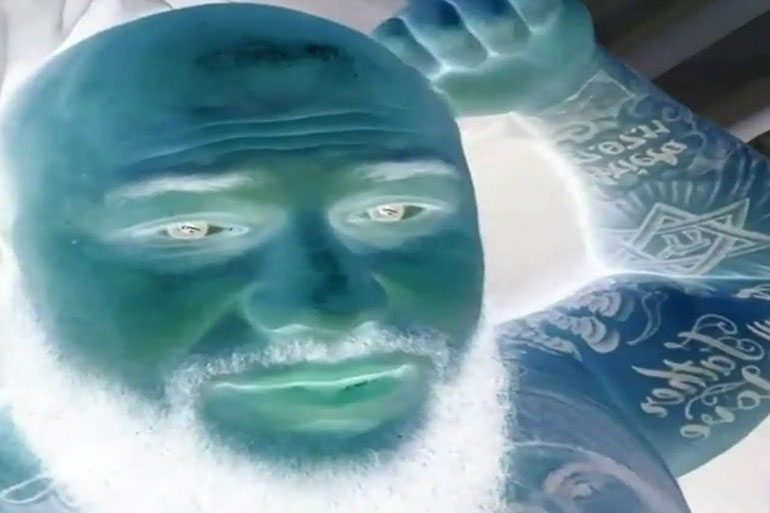
The frame is a close-up of a bald man with a thick white (in the negative) beard and tattooed arms. The colors are inverted: the face is green-blue, the eyes glow, and the background is nearly white. One hand is raised above the head, as if he is holding something or shooting a selfie from below. There is no caption on the picture: it is a blank template to which the text is added.
Who this man is cannot be told from the frame itself, and he is not named in this article: for the format it does not matter. What works is not the personality but the negative effect: the picture looks like the dark side of an ordinary face. That is why this frame suits any caption about an evil double.
How the format appeared and grew
According to English-language descriptions, the “Evil X be like” template was noticed on Facebook in September 2021, and it got its biggest wave on image-sharing platforms, in particular iFunny, in October 2021. One of the early popular variants was “evil Kanye West”, that is, a caption about a well-known musician with a reworked quote.
These are the dates the format spread, not evidence of who came up with the first such joke: the specific author could not be established. The idea of an evil double is much older than the internet, from mirror-image doubles in films to dark versions of characters in games, but in 2021 it received a short caption and a recognizable negative picture.
The mechanics: a mirror, not an insult
The joke is built on two moves. First, the viewer recognizes the original phrase or image: the “X” must have a well-known manner. Then the familiar trait is replaced with its opposite: a kind piece of advice becomes a threat, generosity becomes greed, calm becomes panic.
The closer you know the original, the stronger the punch. The negative in the frame helps: it immediately signals that this is a dark version, and the caption does not need explaining. An important boundary: the joke is addressed to the image and its known line, not to a real person. Attributing genuinely evil actions or views to a real person is no longer a meme but an invention about them.
Caption examples
“Evil Ded Moroz (Russian Santa) be like: presents go to those who replied to the email on time.” The symbol of generosity is turned into a bureaucrat, and the contrast is clear from the first second.
“Evil Shrek be like: this is my swamp, and entry is paid.” The recognizable line “my swamp” is kept, but a petty detail is added that breaks the hero’s good nature.
“Evil GPS be like: in two hundred meters you have arrived. Just kidding, two more hours.” Here the “X” is not a person but an object, and the joke relies on shared everyday experience.
“Evil alarm clock be like: go back to sleep, I’ll be late for you.” The phrase sounds caring, but its meaning is reversed: schadenfreude appears where you expect help.
How to use the template
Choose a hero with a distinctive, familiar tone: the more peaceful the hero is considered, the more the evil version pays off. Keep the caption short: one inverted line, without long explanations.
Write the line in the character’s own manner and change only the meaning, not the style: then the reader hears a familiar voice saying something wrong. If in doubt, do not put real people with sensitive topics into it: fairy-tale characters, objects, and everyday phenomena are safer.