A line from a much longer talk
The popular line 'Ew, brother, ew! What is that?' is said by Mohammed Hoblos, an Australian Islamic lecturer. The original clip comes from a longer religious talk posted on YouTube in 2019. A few seconds of expressive intonation later began circulating separately from the full speech.
In early 2024, the sound started being used in short clips and reaction videos. The line is recognizable thanks to its pauses, emotional repetition, and the address 'brother.' Once separated from the original lecture, it can sound like a universal reaction to something unpleasant, even though it was originally part of a religious argument.
Why the clip works as a reaction
In a short video, the line usually appears at the moment the subject sees or hears something unpleasant. The repeated 'ew' amplifies the reaction, and the closing question leaves room for a visual punchline. A viewer can slot in a failed recipe, a strange purchase, an awkward interface, or a situation where someone showed bad taste.
The sound's recognizability lets the joke work without a long setup: a few seconds of intonation stand in for an explanation. Often the video's author shows the object in close-up and times its appearance to the words 'what is that?' In other versions, the sound becomes a character's own line as they react to a familiar problem. It's important not to mistake the sound's repeatability for permission to mock the religious speaker himself.
The frame and the original context
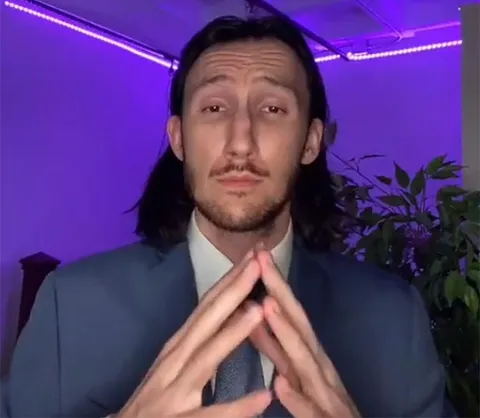
The image shows a man in white clothing and a head covering against a dark room. It's a portrait shot tied to the meme audio; it doesn't show everyone involved in the original speech and doesn't convey the full point of the lecture. The meme itself is built on the sound, so the still frame only carries part of the information.
The viral clip can be used without the speaker's image, so as not to turn a specific person into an object of caricature. If his face stays in the video, a caption can note that it's a short reaction pulled from a long talk. You shouldn't claim that the lecturer deliberately recorded a viral line as a comedy sound bite, or that he endorsed every post that uses it.
Everyday examples
'Opened a container that had been sitting in the fridge for three days' — the sound plays as the viewer sees a questionable dinner. Or: 'The app rearranged all the buttons again after the update' — the character reacts to the interface. Examples like these use the emotional structure without attributing any specific joke about food or technology to the original talk.
In friendly messaging, the clip can be applied to a surprising but harmless surprise, say, a photo of an overly extravagant cake. If the context is religious, it's better not to lay the audio over sacred objects or rites. The reaction's intonation is expressive, but the recipient might find the edit disrespectful or hurtful.
Separating the sound from the man
Once the clip became a meme, it's often shared without the speaker's name or the original speech. That's a common feature of short audio trends, but here the origin matters: the line was spoken in a religious context, not on a sketch set. Pointing that out helps distinguish the original statement from later edits.
Don't draw conclusions about Muslims in general from one emotional clip, and don't present religious affiliation as a source of comedy. If an article is explaining why the sound became recognizable, it's enough to describe the line's rhythm and its reuse. What's funny in new videos can be the object of the reaction or the contrast between footage and audio, not the faith of the person involved.