The joke appeared before the drawing
One of the known early traces of the phrase is a tweet by the user @OBiiieeee from October 1, 2014. The imaginary salesman slaps the roof of a car and insists that an incredible amount of spaghetti will fit inside. Instead of fuel consumption, reliability, or price, he offers a characteristic that an ordinary buyer is unlikely to have intended to check. This line spread separately from the picture.
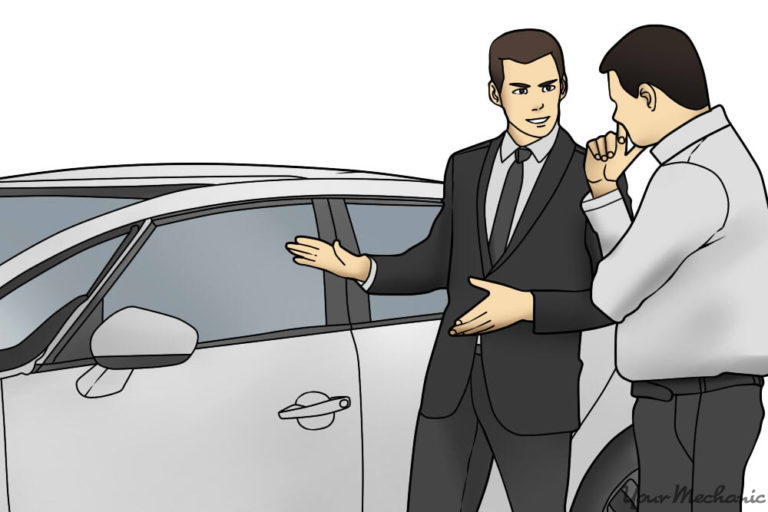
A drawing of a salesman and a buyer was used in a YourMechanic piece about communicating with car salespeople. The article by Cheryl Knight is dated February 25, 2016. Later the illustration was combined with the old phrase; the known versions of this combination date to 2017. In June 2018 the format gained wide circulation on Reddit, including r/MemeEconomy and r/dankmemes. Users changed the item being sold and its contents while keeping the tone of a confident offer. In this way a standalone line turned into a template for many new jokes.
What the salesman actually does
In the drawing, on the left is a white car, and in the center a man in a dark suit and tie. He faces the buyer with his hands open, as if explaining the advantages of the offer. On the right, a man in a white shirt raises a hand to his chin. His pose can be read as considering what he has heard. In the bottom right corner the YourMechanic watermark remains; there is no ready-made meme caption here.
The salesman does not tap the roof of the car. That gesture exists in the text stage direction that is added to the image, and the viewer supplies it mentally. In the illustration itself the difference in roles matters more: one persuades, the other evaluates. The car marks the object of the deal but does not limit its meaning. In the caption, any container can take its place — from a suitcase to a chat — as long as the speakers keep the relationship of salesman and potential buyer.
Advertising a useless advantage
The line imitates a short product presentation. First comes a familiar address to the object, then a promise of a large quantity of something inside. The salesman’s confidence presupposes in advance that such capacity should impress. The funny turn appears in the last word: the contents turn out to be unnecessary, unpleasant, or completely impossible. The calmer the recommendation is delivered, the stronger the feeling that no one notices its absurdity.
The construction also has a more biting variant: the promised advantage becomes a drawback. If a work chat can hold hundreds of extra notifications, the salesman literally tells the truth but for some reason presents it as a reason to be happy. You can also change the salesman himself while keeping his attempt to interest the listener. But the joke depends on the link between the object and its contents: inside a large group, messages are plausible; inside a deadline, urgent tasks are. Without such a link the final line loses its advertising logic and becomes a random list.
Three invented deals
The salesman slaps a school backpack: “This beauty will hold so many assignments for the weekend!” The buyer is offered capacity for future trouble. The backpack here remains a real object, so the absurdity is concentrated in the cheerful assessment of its contents.
The second example shows an empty family chat: “An incredible number of identical congratulations will fit in here.” The digital space plays the role of the car interior, and the promise advertises the tedious repetition. The third variant sells a December calendar and praises its ability to hold all the tasks that were postponed since January. It transfers the idea of capacity to time: a physically small page receives a disproportionate load. All three scenes are invented, but they keep one recognizable manner of persuading the buyer with an advantage he is unlikely to be pleased by.