From a shared photo to a comparison
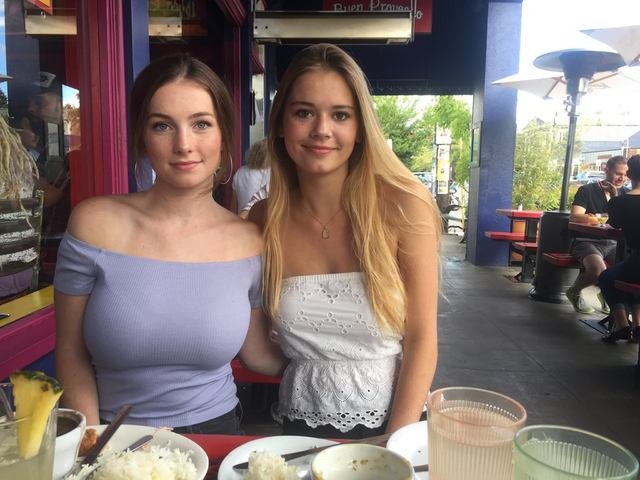
The original story is tied to a photo posted on Instagram in July 2016 in a congratulatory context. The early post used a cropped version of the image. A wider frame later spread on imageboards; the earliest dated trace of that version goes back to October 2017. These stages differ: the appearance of a photo is not the same as the creation of the caption that turned it into a meme.
In spring 2018 the image was already being used for visual contrasts. The examples described include comparisons of supporters of different views on the shape of the Earth and of different decades. The picture was then actively remade in Russian-speaking communities. A fake screenshot of a tweet, attributing a complaint about one woman to the other, also circulated separately. That text is a joke and is not a genuine statement by the people in the photo.
What can be seen without a caption
The two women sit side by side at a café table and look into the camera. On the left is a lilac top with bare shoulders, on the right a white top; glasses and plates of food sit on the table. In the background are other customers, furniture, and a doorway. Both women pose calmly, so the photo by itself shows neither an argument nor a rivalry.
The format's name stuck because of the difference in silhouettes. However, meme roles are created by the caption: the photo does not rank the women or express a judgment of one by the other. The image has no arrow saying 'better' or 'worse.' The author can compare a large and a small volume, a promise and a result, or two sets of features; the verbal frame determines which exact difference the reader is meant to notice.
The photo as a conditional diagram
Unlike a bar chart, here the reader sees a living everyday scene. The contrast looks clear, but size does not equal quality: a large package may be less convenient than a small one, and a long explanation less useful than a short one. The most precise captions name the difference in volume and let the viewer recognize the exaggeration on their own.
Usually each side gets one short label. The result is a comparison read left to right, without a separate punchline below. The café setting can add meaning to jokes about food, orders, and the bill. In other cases it stays in the background. When captions get too long, attention shifts from the visual proportion to the explanation, and the photo becomes an optional illustration.
Three invented pairs
The invented variant 'Weekend plans / Free time' compares an overstuffed list with a limited resource. It works without the idea that one person is better than the other: the two figures take on the roles of two mismatched quantities. Another example is 'Stories about the trip / The trip itself.' The long narrative turns out longer than the short journey, which makes the enthusiastic storyteller funny.
The third pair: 'A bag with everything you might need / Things you actually used.' The viewer recognizes the habit of packing too much and mentally fills the picture with unneeded chargers, spare clothes, and snacks. What matters here is that both captions belong to one invented situation. The women's shared pose keeps a light, comparative tone: the meme shows a mismatch between two volumes without having to invent a conflict between the women in the portrait.