What the phrase means
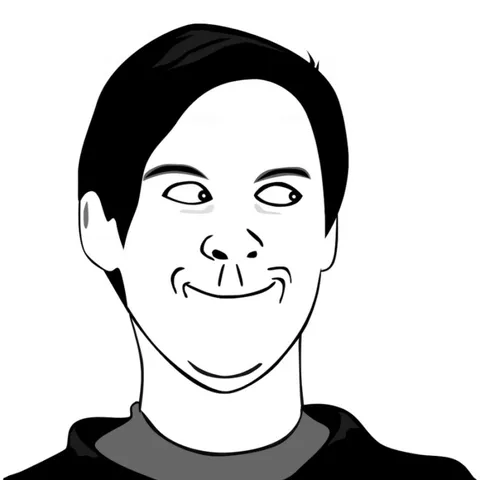
The phrase "I see what you did there" translates literally as "I see what you did there." In English-language discussions it marks the moment when the other person has noticed a pun, a reference, or a clever move in a piece of text. In essence it's praise for the author's wit: the speaker shows that they caught the trick and appreciated it, rather than just laughing.
In the Russian adaptation the meaning stays the same but sounds a bit different. The phrase "I know what you did" carries a tinge of suspicious approval, as if the person has secretly caught onto someone else's cleverness. That's exactly why the meme suits situations where someone has pulled off a clever play on a topic or slipped in a hidden reference.
The drawing and its style
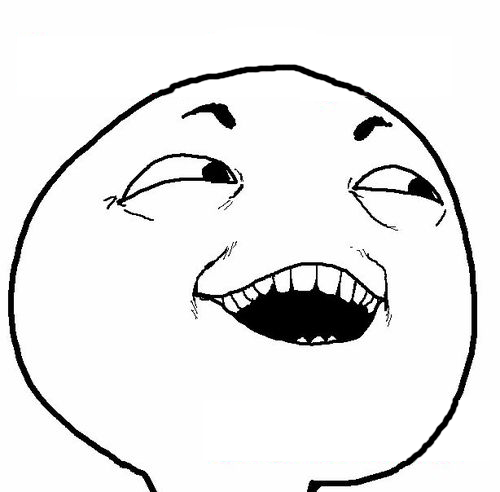
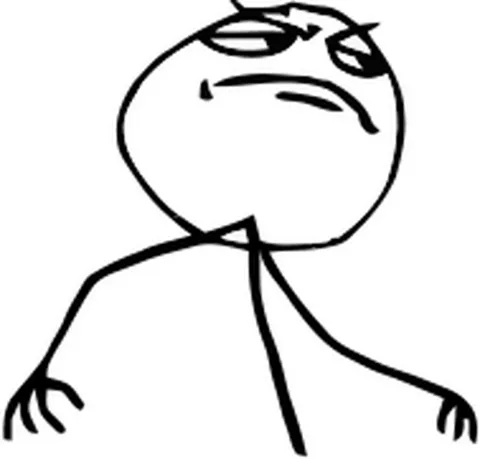
The image belongs to the Rage Comics era, when simple drawn faces with a limited set of emotions spread widely across the internet in the early 2010s. The face here is drawn in black outline with no fill, eyes narrowed to the side, and a wide, toothy smirk. This style made the image easy to copy and rework.
The authorship of the specific drawing couldn't be established. Faces like this were created and tweaked by countless forum and comic users, so versions vary. For the meme, what matters isn't the exact line work but the recognizable expression: squinted eyes and a crooked smirk instantly read as "I know what you were up to."
Spread
The meme spread through forums, imageboards, and social networks, where users dropped the picture into discussions of jokes and riddles. Over time the face started being used as a reaction to a witty line in TV shows, films, and talk shows, whenever viewers caught a reference to a previous episode or a well-known line.
The "TV shows" topic tag, under which the entry is filed in the catalog, points to exactly this kind of usage. Viewers often wrote the phrase under stills where a character deliberately or accidentally repeats a key line, and such captions tied the meme to media contexts.
Variants of use
The most common variant is a reply to a successful joke in a chat. The user sends the drawing to signal that they got the irony and won't call it out loud. Sometimes the meme accompanies a spoiler or a hint in a message, in which case the face works as a silent confirmation that the author noticed the trick.
There's also an ironic use: the face gets placed under one's own message to show that the speaker themselves realizes how their words come across. In that case the meme works as self-irony rather than praise for someone else's wit.
Cultural context
The meme belongs to a family of reaction images that replace a lengthy reply with a single face. Russian-speaking internet users value it for its brevity: one image is enough to convey both approval and a hint of a shared secret. Such images last a long time because a brief expression is understandable without translation and without knowledge of the original context.
Modern users more often rely on ready-made stickers and emoji, but the classic drawings retain nostalgic value. They're a reminder of the early internet, when comics were drawn by hand and posted to forums, and popularity was decided not by algorithms but by the number of saves and shares.