What's shown in the image
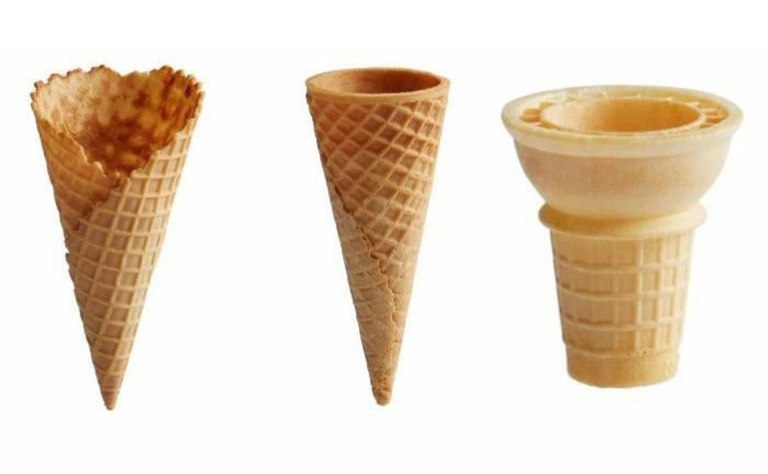
Three waffle ice cream cones stand against a white background. On the left is a cone with an uneven, ragged edge, as if it had been broken off. In the middle is a classic cone with a smooth round edge and a crosshatch pattern on the surface. On the right is a cup-style cone with a flat base: it has a wide bowl with a wavy rim up top and a cylindrical stem below.
It's used precisely in this 'blank' form, without captions. The source of the photo of the cones is unknown — all that's known is that it serves as an illustration for the question 'which one would you pick?'
The format: a choice instead of a horoscope
The meme is built as an opening line that bluntly dismisses astrology, followed by a question about a preference: which Harry Potter house, which cone, how you listen to music. The answer supposedly reveals more about a person than their birth date does. The joke doesn't claim to be scientific — it's a game in which choosing a cone or a Hogwarts house stands in for astrology.
According to reference material, early versions date back to around 2013: on Twitter, people were asked to pick a tea flavor, and in 2016, a Pokémon GO team. The format went mass in the summer of 2018, when a post about Hogwarts houses collected more than 18,000 shares and was later deleted. The peak fell on August 11, 2018, after which the genre branched out into music, video games, and everyday trivia. The '2010' tag sometimes attached to the meme refers to the decade, not a specific year; this information comes from English-language roundups, and there's no confirmed single creator of the format.
How to read the cone choice
The meme doesn't prescribe specific interpretations, so everyone comes up with their own. The left cone, with its ragged edge, can easily be described as 'someone who doesn't care how it looks as long as it tastes good.' The middle one is 'someone who loves order and always stacks napkins neatly.' The right one, with its wide bowl, is 'a practical person who can't stand drips.'
These aren't scientific personality types. The point is to deliver an amusing explanation, and the more serious the tone, the funnier the absurdity looks. A good trick is to tack on a thoroughly mundane detail after each 'diagnosis' — a habit of running late, or an attachment to one particular mug: the contrast between the solemn framing and the triviality is what gets the laugh.
Made-up captions
'Pick a cone and I'll tell you how you parallel park.' A bait-and-switch question: cones have nothing to do with parking, and that's the joke.
'If you picked the left one, you're still the last one finishing your food anyway.' The caption turns the ragged edge into a character trait: 'not perfect, but reliable.'
'Middle one: your playlist is sorted alphabetically. Right one: you actually read the instructions.' Two short character sketches in a row create a rhythm.
'Whichever you pick, you're the one in the group chat asking who's going to the cafeteria.' A universal punchline that applies no matter what anyone picks.
Usage tips
It works well in chats and polls: the image stands in for a long question. It works best when you've already come up with a few 'diagnoses' ahead of time and reveal them in the replies.
Choosing a cone doesn't actually say anything about anyone's character — the whole effect relies on treating a random picture with mock seriousness, not on any real diagnosis that should be applied to an actual person.