What's visible in the photo
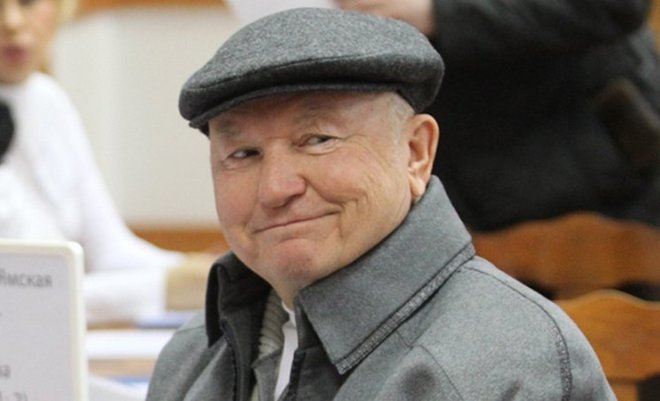
The shot is a close-up of an older man with a round face. He wears a gray flat cap of thick fabric and a gray jacket with a collar. He has turned his head toward the camera and smiles faintly at the corner of his mouth, squinting: the look is more sly than official. The background is blurred; a wooden chair is visible in the room, along with part of another person on the left.
The frame is not a formal portrait but a candid shot, and what makes it a meme is the expression: good-natured, with a trace of slyness. Such expressions are easy to attach to any situation where a person knows more than they let on.
Who Luzhkov was and what the cap has to do with it
Yuri Luzhkov was mayor of Moscow from 1992 to 2010; in September 2010 he was dismissed. He died in December 2019. Over his many years in office he became one of the most recognizable figures in Russian politics, and his distinctive headwear, the flat cap, became part of his image in caricatures and jokes. This detail is noted both in publications about him and in other materials.
That the cap matters to how he is remembered is also shown by this fact: on a memorial plaque unveiled in Moscow after his death, he is depicted, as media reported, wearing the cap. The exact time when this detail turned into a meme has not been established, so no precise dates are given here.
How the meme works
The cap in this picture works as a marker of recognizability. A single object is enough for the viewer to understand who is meant. Our weakness for such details has long been known: we recognize characters by a cloak, a hat, a mustache, or glasses faster than by their faces.
The facial expression adds to this. A sidelong smile turns an official figure into a person who knows some story. Together they form a template suited to lines like “I remember everything” or “I'm in the know.” The joke is aimed not at politics but at the image itself.
Caption examples
“When someone asks who broke the vase, and you saw it but keep quiet” — the sly smile as a sign of silent knowledge.
“A cat when it hears the sound of a can being opened” — the smile turned toward anticipation of food.
“Grandma, when her grandson says he's going to work but is actually going for a walk” — a caption about the sharp insight of elders.
“Me when I read someone else's messages and pretend I didn't see anything” — a joke about feigned ignorance.
How to use it
The photo is best used in neutral, everyday jokes not connected to the subject's real merits or misdeeds. Do not attribute to the man in the photo any actions or statements that are absent from verified sources: the caption should remain a joke.
Short captions above the picture work well. If you want to tell the story of the cap, stick to verifiable facts: the years as mayor and the memorial plaque.
A good working device is a caption from the viewpoint of someone who notices a suspicious detail, for example “I see you've already eaten everything.” The smile in the frame answers without words. A two-line caption in which the second line flips the first makes the most of this pause.