What the picture shows
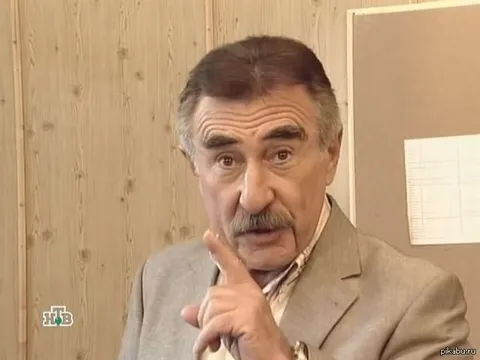
The photo shows an older man in a dark jacket and tie, shot straight on against a neutral beige background, in the style of a studio portrait or an ID photo. His expression is serious, almost blank, which adds a deliberate absurdity: there is nothing magical, mystical, or even remotely unusual in the shot. The comic effect comes from the gap between the man’s ordinary appearance and the caption “колдун” (“sorcerer”), set in the ornate, hand-lettered Lobster typeface.
The identity of the man pictured has not been established. On meme-site cards and themed public pages he appears solely as “колдун”; his name, occupation, and the circumstances of the shoot are nowhere specified. Judging by the quality and format of the photo, it may have been an amateur or archival picture found online by chance, with no original connection to internet humor at all.
Origin of the meme
The exact origin of the meme is not established. It belongs to a large layer of Russian-language “abstract memes” of the late 2010s: pictures with deliberately strange or random captions that spread through VK (VKontakte) public pages and Telegram channels without being tied to a specific author or original source. A caption “колдун” under a portrait of an ordinary man in a suit is a classic device of this kind of humor: the word is chosen not for its meaning but for its sound and its potential to surprise through the mismatch with the picture.
Catalogs that collect such images give 2018 as the year of appearance, but independent sources (archives of public pages, dated posts) do not confirm this. The meme is too small and local for major international meme encyclopedias, which mainly document English-language phenomena.
Why the meme became popular
The popularity of such abstract memes in the Russian-speaking segment rests on the element of surprise. The user expects to see something that explains the caption but finds only a neutral portrait without any “sorcerous” attributes. This contradiction works better than a direct punchline: it needs no context and is equally funny in any group familiar with the language of internet humor.
The Lobster font the caption is set in has itself become a recognizable element of a whole class of such pictures. The ornate, “handwritten” style combined with a random word and a random image is a stable visual code of the abstract meme genre of 2017–2019.
Use online
“Koldun” is used as a reaction image in comments and chats, when someone wants to express approval, ironic admiration for someone’s skills, or simply to break the mood with an absurd insert unrelated to the conversation. Typical captions accompanying a repost play on the word “колдун” literally, even though what is happening has nothing to do with sorcery: “он просто колдун, как он это сделал” (“he’s a total sorcerer, how did he do that”), “колдун узнал пароль с первого раза” (“the sorcerer guessed the password on the first try”).
The image also appears in collections of “old” or “classic” abstract memes that periodically resurface in feeds as nostalgic content for those who saw the heyday of this kind of humor on public pages in the mid-to-late 2010s.
The meme’s place among other abstract pictures
“Koldun” sits in one row with dozens of similar images from that period: random photos of people, animals, or objects with short captions that have no logical connection to them. What sets this meme apart is its recognizable font and the static character himself. He does not move, does not change, and does not grow variations, unlike many other templates that over time get remixes and sequels.
Thanks to this simplicity, “Koldun” remains recognizable as a single artifact of its era rather than as an evolving format. Compare memes built on series of photos of the same person in different situations, which develop in a different way.