Where the image came from
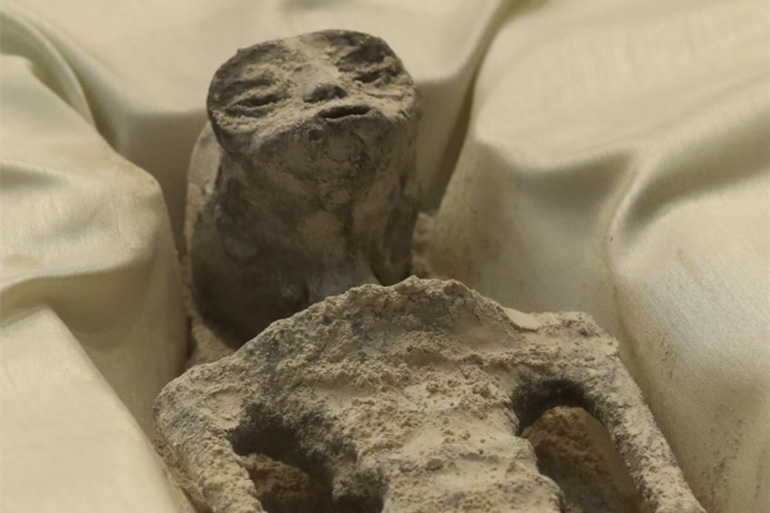
In September 2023, the journalist and UFO researcher Jaime Maussan presented two small bodies to the Mexican Congress, calling them non-human. The presentation took place at public hearings on unidentified phenomena. According to the presenters' own account, however, the place of discovery was in Peru, not Mexico. The phrase "Mexican alien" names the place of the sensational showing, but proves neither the country where the bodies were found nor the nature of the remains.
The claim drew sharp criticism from scientists and specialists in ancient remains. Earlier finds linked to Maussan and the same story had already been declared in Peru to be dolls artificially assembled from bones and other materials. Later studies of the presented figures also failed to produce generally accepted proof of extraterrestrial origin. So in an article it is important to separate the actual fact of the public showing from the disputed interpretation pushed by its organizers. The meme uses the image's appearance, not the result of any credible identification of an alien.
How a science story became a template
Frames with an elongated head, a small body and a pale surface are easily pulled out of the context of a complicated dispute. They became a meme at about the time photos of the hearings spread through the news and short videos. The picture acquired a second, far more everyday use: people began captioning it as though it showed an object or character that had lived far too long. A weathered face, battered gadgets, furniture that did not survive a renovation: all of it can be compared to a mummified silhouette.
The comic effect rests on hyperbole and a crude visual analogy. A minor flaw becomes evidence of centuries of age: "this couch has seen the Bronze Age" or "my battery after winter looks just like this." It is important not to present a joking caption as scientific proof, nor to write as if the photo definitely identifies the species of the creature. The meme itself does not settle the dispute over the bodies' origin; it only shows how strange and recognizable the published images look.
What the captions are actually mocking
Most often the template works as a wear-and-tear scale. The fresher and more mundane the described item, the funnier the ancient silhouette beside it looks. "A brand-new laptop with forty tabs open" turns ordinary device fatigue into an archaeological find. Another version is built on a time jump: "me after one Monday meeting," and the image becomes an exaggerated self-portrait.
You can also joke about an old item that has outlived several owners: "this kitchen chair survived another family celebration." But the meme touches on real cultural and scientific subjects, so do not apply it to real victims, archaeological remains, or people with disabilities. It is better to aim the exaggeration at a safe everyday target: gadgets, clothes, a drawn-out renovation, or your own state after a tiring week.
How to read the meme without confusion
When a caption says "alien from Mexico," it is often shorthand for an internet image rather than a geographical reference. The historical scene was a public event in Mexico; the claimed place of discovery was Peru; conclusions about a non-human nature remain disputed. It helps readers to keep these levels separate. Not every image from a news story confirms the claims that accompanied it.
For your own version, choose a clear parallel: an item that is improbably old and has unexpectedly outlived its era, or a person who feels ancient after a simple task. One short comparison is enough; a detailed legend about the origin of the remains is not needed. If you use the photo in a discussion of the presentation itself, label it a disputed claim, so that the meme wording does not turn into a statement about a proven discovery.