The sculpture itself
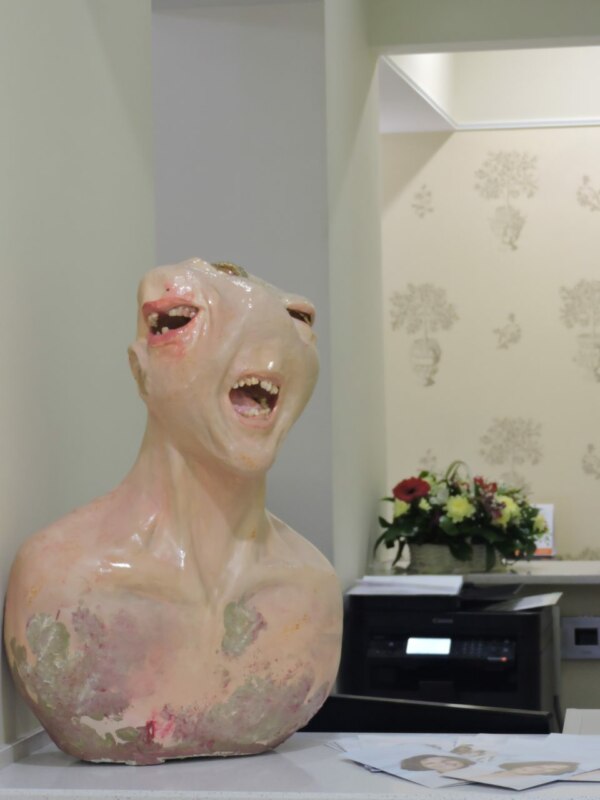
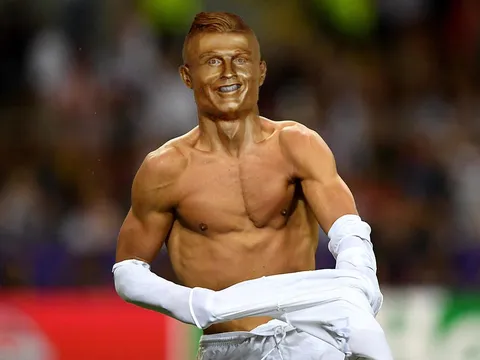
The sculpture depicts a human head against the backdrop of a half-bust: the face is distorted, the mouth wide open in a silent scream, the eyes narrowed, and the skin looks stretched and damp. The piece is assembled from human teeth, and it's precisely this combination of corporeality and deathly texture that makes the image unsettling.
In the published photograph, the sculpture stands on a light surface next to an office printer, a flower arrangement, and scattered photographs. This contrast between the sterile interior and the grotesque figure heightens the effect: the piece reads as the intrusion of an alien object into an ordinary space.
The title and its meaning
The title "Monument to Toothache" sets an ironic tone: monuments are usually erected in honor of significant events or people, while here the object being immortalized is a painful, almost infernal experience. Toothache is often described in Russian-speaking culture as one of the most exhausting physical torments, so the metaphor reads instantly and needs no explanation.
The artist's detailed intent is not set out, so the interpretation should be treated as the viewer's own rather than the author's. The exact circumstances of the work's creation and its exhibition history have not been established.
How the sculpture became a meme
The sculpture's transformation into a meme began with photoshop edits: users layered captions onto the image, inserted it into frames from well-known films, turned it into a comic-book character, or a frightening "relic" from nonexistent museums. The expressiveness of the face made it possible to use the image in almost any context requiring a depiction of extreme torment or despair.
Over time the meme outgrew the specific photograph. The phrase "monument to toothache" became an ironic label for any object that provokes a mixed feeling of pity and disgust. Such a shift in meaning is typical of many internet images that start out as a single picture and end up as a general template.
Why the image is memorable
Researchers of perception have long described the "uncanny valley" effect, in which a figure is almost human-like but looks wrong. Here the effect is heightened by the open mouth and strained face, while the teeth, being both a part of the body and a source of pain, create an unsettling duality.
Another important detail for the viewer is that the meme rests not only on humor but on visual shock. That's why it's more often used as irony aimed at dentistry, illness, or a dramatic situation, rather than as mockery of a real person.
Legacy
Today, "Monument to Toothache" remains an example of how an unusual work of art can become part of internet folklore. Photoshop edits featuring it appear irregularly, but the image's recognizability has held up, and the association comes to mind immediately for anyone who's seen the original picture.
The story of the work shows how quickly a viewer can translate an object into their own language of jokes. The irony here doesn't cancel out interest in the sculpture itself but adds to it, and that's exactly why the image keeps living online. For future researchers it's interesting precisely because it combines the artist's physical work, internet reworking, and everyday irony in a single image.