The conversation that became the source of the frames
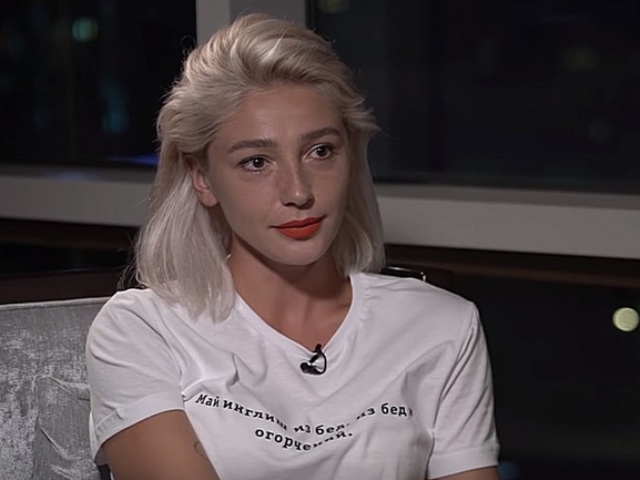
The interview with Ivleeva came out on the “vDud” channel on August 21, 2018. Yuri Dud asked her about her work, her earnings and her personal relationships; within a few days the conversation was already being discussed in roundups of jokes and memes. It was a wave of repeated use of the frames, not a single picture with one required author and caption. A fragment of the conversation was easy to separate from the hour-long talk: the facial expression remained, while the original question disappeared. This created room for new lines, in which the viewer could supply their own disbelief, surprise or pause before an answer.
A calm freeze-frame and a long answer
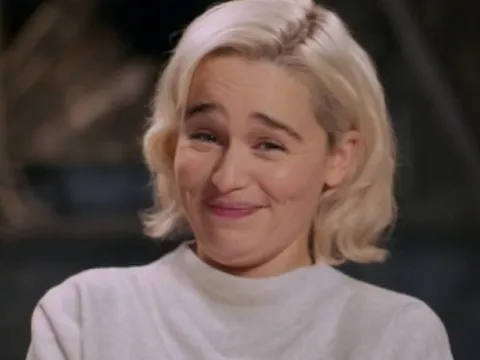
Ivleeva sits in the armchair, looks at her interlocutor and appears composed; the white T-shirt with its lettering is partly cropped. There is no text or built-in joke in the frame. The effect appears only next to a new caption: the same gaze can accompany a clarification, a doubt or the expectation of more to come. The short fragment keeps the setting and the interlocutor outside the frame, but releases the original question. That is why it works as a reaction photo rather than as a documentary illustration of words that are not in the picture. Some interview remakes kept the spoken quote, while others separated the still freeze-frame from the original question and attached a new caption. Here the second approach works: the new intonation is created by the added text, not by a separate quote. This is a photo reaction, not a quote macro.
How context changes the impression
The conversation moves between topics such as first earnings, working as a host and personal life. Watched in full, the questions and answers form a sequence; once cropped, only a moment between lines remains. This changes the image's function: instead of retelling the interview, it sets the rhythm of a short reaction. A caption can make the pause awkward, focused or friendly, even though the original facial expression stays the same. This transformation of a big interview into a small reaction is the main change of format. Later the interview also produced another meme branch: in October a musical remix assembled from a spoken episode of the conversation came out. That is already an audio format and a separate story, not the same portrait frame; it shows how one long episode could supply different materials for remakes.
Invented situations
Invented caption: “When the host asked why you chose exactly this topic for your talk.” The frame conveys the pause before an answer. Another variant: “My colleague said the meeting would be over in five minutes and opened a forty-slide presentation.” Here the listener already notices the gap between the promise and the reality. For a friendly reading, use: “When a friend explains a new hobby and finally shows why they like it.” These captions are invented; they use one frame as different reactions without retelling the interview.