The image in the frame
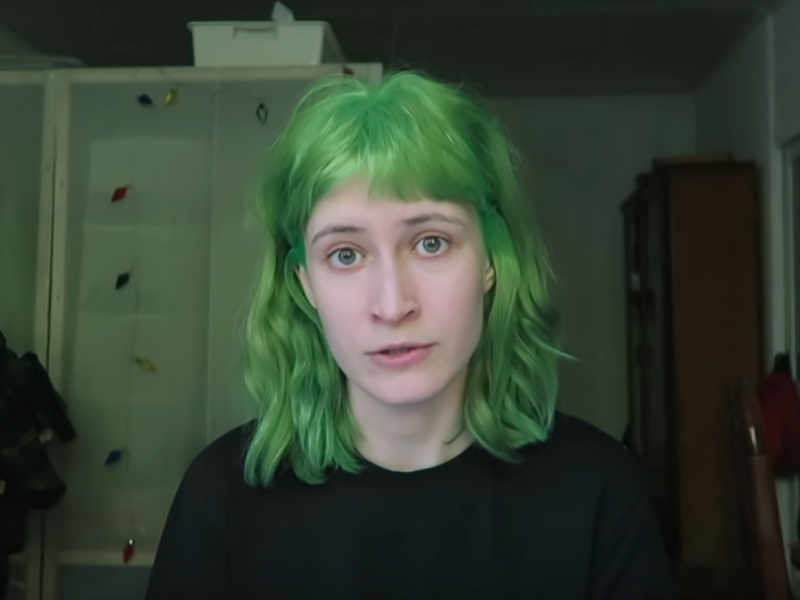
The photo shows a young woman with bright green wavy hair to her shoulders and bangs, in a plain black T-shirt, against a simple room with an open wardrobe and clothes on hangers. Her gaze is directed straight into the camera and her mouth is open mid-word. It is a typical freeze-frame from a talk-style video blog: not a staged photo, but a captured moment of an emotional monologue.
From art blogger to public figure
Nika Vodvud’s channel began with videos about art, drawing, and personal reflections, but over time she spoke more and more actively on feminism, women’s rights, and social justice. Her bright, often changing hair color became her visual signature, recognizable even without her name. Green, pink, and blue shades rotated through different videos.
Reasons for popularity and controversy
NixelPixel draws strong support and strong rejection at once. Part of the audience values her directness, her willingness to openly discuss uncomfortable topics, and her emotional sincerity on camera. Another part accuses her of being overly rigid and uncompromising, inconsistent in her positions, and too sharp toward opponents. Debates around her regularly spill beyond her own channel and become topics of separate discussions and videos by other bloggers.
How her image is used in memes
Screenshots of her emotional facial expressions have become go-to material for reactions and ironic captions, both from supporters illustrating her courage in speaking out and from critics mocking the sharpness of her tone. Typical captions on such frames include “explaining it for those who are ‘in the tank’” (Russian slang for being clueless) or “when the comments once again say the same old thing,” playing on her direct, insistent style of arguing a position.
Her place in the Runet landscape
Over time, NixelPixel has established herself as one of the symbols of the public feminist agenda in the Russian-language internet. She is a figure around whom not only personal debates but broader arguments take shape about activism, freedom of speech, and the limits of acceptable tone in online discussions. It is precisely this double reputation, at once a heroine and a target of criticism, that sustains steady interest in her image years after her first viral videos.
Recognizability beyond a single clip
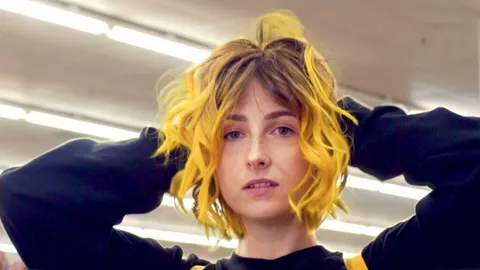
An important feature of her meme popularity is that circulating images are not single viral frames but a whole gallery of similar freeze-frames from different videos, with different hair colors but the same expressive, direct delivery to the camera. This sets her apart from “one-frame” meme figures. Audiences recognize her manner of speaking and looking into the lens, not a specific photo, so new screenshots from fresh videos continue to fit organically into the existing meme persona.
Captions on such frames include both friendly, encouraging ones (“now here’s someone who really tells it like it is”) and snarky ones (“there goes another ten-minute lecture”). Both types of reaction use the same visual material but place the emphasis in opposite directions, which itself illustrates the blogger’s ambiguous status in the eyes of different parts of the audience.
This double life of the same frames, as an illustration for a serious statement at one moment and as material for irony the next, is what distinguishes NixelPixel from bloggers with a more uniform reputation. Her face in memes is almost never neutral; it always carries the imprint of the position of whoever posts the screenshot.