A phone without damage
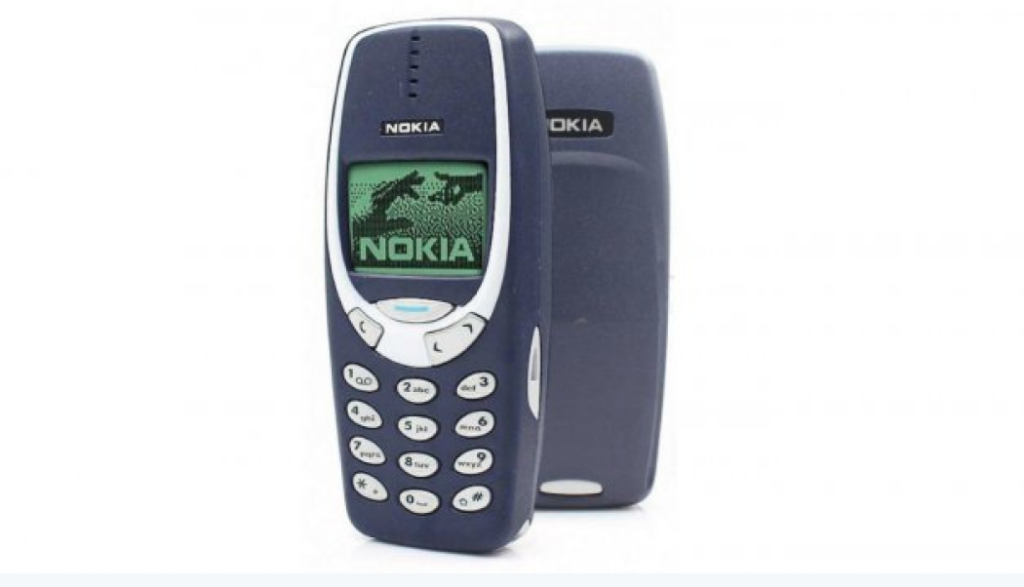
The white background shows the Nokia 3310 from the front and the back: a blue-gray body, a small monochrome screen, physical buttons and noticeable thickness. There are no cracks, no hammer and no text in the frame; it is a product portrait, not proof of durability. But the viewer already knows the model's reputation and easily adds to the calm photo a story about a fall after which the phone supposedly remained intact.
The model appeared in 2000, when a phone was first of all a device for calls and SMS. In its official announcement, Nokia emphasized mobile chat, text messages and personalization; around such an everyday device, a different, folk description gradually formed: sturdy, simple, long-lasting. The difference matters: the company advertised functions, while the internet turned the body into a character.
From one phone to a legend about the 3310
In late 2011, the meme story began not with the 3310 but with the Nokia 1100. In a Reddit discussion, it was called the “Terminator of phones” and compared to an object that could be destroyed only in the Crack of Doom in Mordor. In reply, a user attached a picture of the Nokia 3310 and dubbed it the Witch-king, another figure from “The Lord of the Rings.” This was an early shift from a joke about a single model to an almost fantasy image of an unkillable phone; later, the 3310 became the standard comparison for fragile smartphones.
This shift explains why the nickname has outlived the specifications. The old phone stopped being just a successful model and became a prop that can be set against any destructive scenario. In popular variations, it smashes the floor when dropped, survives a catastrophe, or turns out to be the last working object after the apocalypse. This is hyperbole, not a laboratory test: the point is that the viewer accepts the legend for the duration of the joke.
Why durability sounds like a superpower
The 3310 is convenient for this exaggeration precisely because of its recognizable simplicity. It has no complicated touchscreen that one could imagine shattered, but it does have a small display, a dense body and buttons. The familiar look turns the phone into the opposite of a modern device, which is expensive, thin and alarmingly fragile. Even if a person has never used this model, its silhouette reads as a thing from an era when a gadget could be carried without a separate ritual of caution.
Compared with a new smartphone, the meme works like a fairy-tale duel: one contender demands a case, glass and insurance, while the other supposedly withstands a hammer blow. Still, real phones break anyway, and the image does not claim universal invulnerability for any particular unit. It responds to a shared feeling that new devices have become more complex and more vulnerable, and a simple handset takes on the role of an undefeated veteran.
Invented trials
An invented version: a phone lies on a table, next to a list of five tasks, and the caption says that the Nokia has survived the owner's third attempt to move an alarm to the weekend. Here the endurance is not physical: the device withstands endless button presses and its owner's habits.
Another invented example shows a Nokia next to a modern smartphone in the rain: the new device is tucked under a jacket, while the old one supposedly keeps receiving SMS and running Snake. What matters is not an instruction on how to handle technology but the deliberately staged contrast of roles: one gadget is surrounded by care, the other gets an almost fairy-tale biography. A simple photograph leaves just enough empty space for such a legend.