The caricature came before the captioned macros
The image spread on social networks as a standalone drawing about social behavior. The more reliably traceable reposts date to the autumn of 2017, when the caricature was included in compilations claiming to explain modern life at a glance. The artist's name and the exact date of creation have not been established. The title “Scapegoat,” which appeared during its circulation, was a way of interpreting the drawing rather than a confirmed author's title.
In May 2018, Russian-speaking communities began actively adding lines to the people around the figure. The drawing gained a new layer: each pointing character represented a particular stereotype, demand, or accusation. Later the caricature was also used ironically, mocking someone who too solemnly appoints themselves the only one in the right. So the history of the format is not made up of a single unchanging moral. First a ready-made visual thesis spread, then users distributed roles within it and could flip the original reading.
A blue island in yellow water
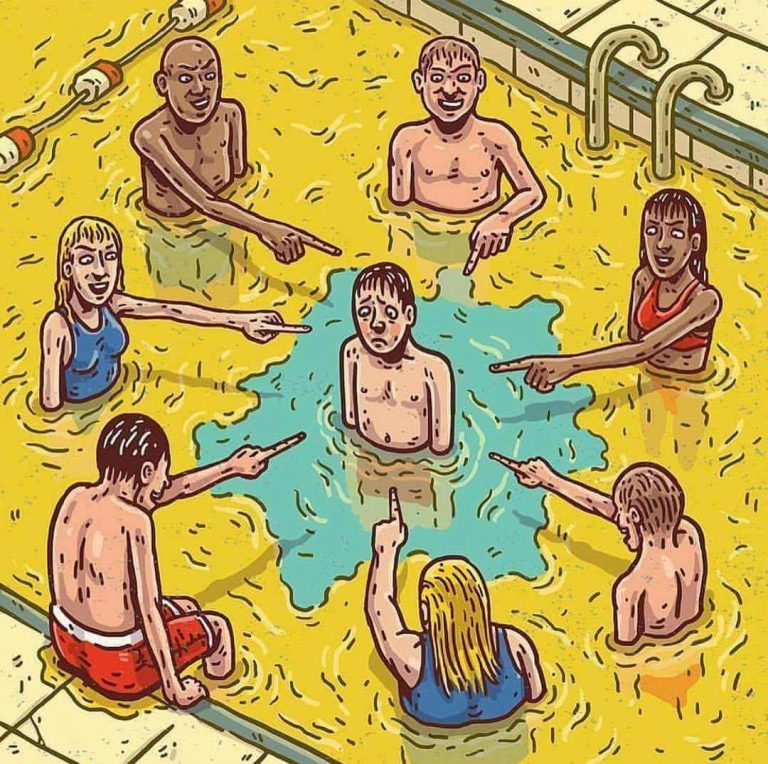
In the center of the pool stands a bewildered man. Around him remains an irregular area of blue water, while the rest of the surface the artist made yellow. The people around are smiling and directing their fingers toward the central figure. At the edges you can see the pool's rim, a ladder, and a lane divider. There are no words or additional captions on this version: the accusation is conveyed through faces and gestures.
The color forms two zones within one shared space. The central man cannot leave the conversation while remaining in the pool, yet visually he is separated from the crowd by a clean area. The pointing hands converge on him from almost every direction. Such a drawing lets you see both the pressure of the majority and the contradiction in its behavior at once. The name of the meme explains the yellow color through urine; it is a conventional sign of the caricature, which does not need to look physically plausible.
Who appointed themselves the judge
The first reading is built on the difference between who is accusing and what that person does themselves. The crowd displays confidence and numerical superiority, yet the drawing places an unpleasant stain around it. The only embarrassed participant looks like a violator of the common order simply because everyone else is looking in the same direction. Captions can turn that order into a habit of being rude, spreading rumors, or endlessly demanding identical decisions.
The ironic reading targets a different figure: an imaginary author who considers themselves a clean island among corrupt people. Then the excessive clarity of the color boundary is funny in its self-confidence. One drawing is not enough to learn the real actions of all sides, but the meme composition has already handed out its verdicts. It is precisely this ease that makes the template convenient both for a serious complaint about pressure and for a parody of an overly flattering story a person tells about themselves.
Roles for one shared pool
In an invented macro, the central figure is captioned “suggested scheduling meetings in advance,” and the people around respond: “Why can't you ever just take off on ten minutes' notice?” The drawing exaggerates the dispute between planning and the habit of deciding everything on the spur of the moment. Another variant concerns a shared work chat: a person asks everyone to stop sending dozens of identical messages, and the crowd accuses him of creating extra discussion. The fingers point to a complaint that repeats exactly the behavior he had complained about.
A third joke can be self-ironic. The center gets the caption “me, who closed all the tabs once,” and the others get “people with the wrong attitude toward order.” A small achievement grows into an imaginary moral superiority. The color scheme stays the same, but the target of the mockery changes. The pool gives several participants a shared environment, which is why it shows especially well how easily arguers separate themselves from the actions of their own group.