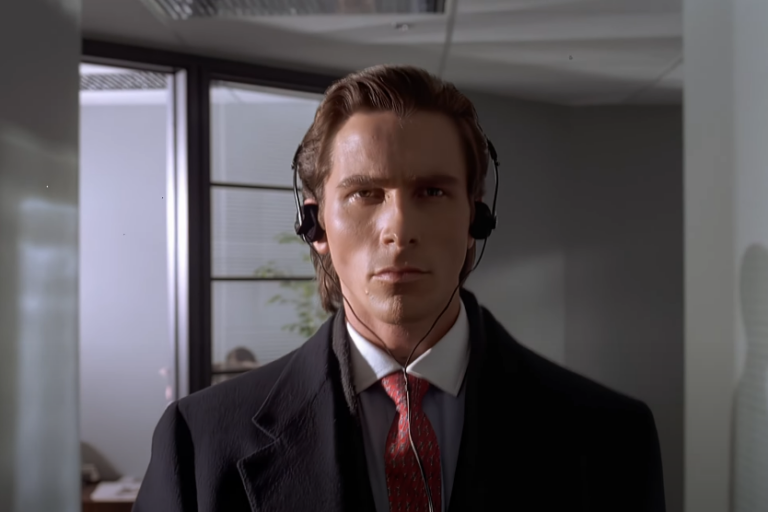
A frame from the film
The image shows Christian Bale as Patrick Bateman: a neat suit, big headphones, a motionless expression and an office interior. The character comes from the 2000 film “American Psycho”, based on the novel by Bret Easton Ellis. In one of the most famous scenes, Bateman prepares for violence while “Hip to Be Square” by Huey Lewis and the News plays.
The meme image highlights the headphones and the concentration, sometimes removing the circumstances of the scene. That is why captions and swapped music create a separate comic context. It is important to remember that the film portrays a dangerous and unreliable narrator; the frame's outward calm is part of the artistic image, not a recommendation to imitate the character.
How the template changed
The frame is easily adapted to an audio reaction: the viewer can imagine the hero listening to a completely different genre, an absurd voice clip or a song that does not match his strict look. Video edits usually heighten the contrast between the flawless business appearance and audio that seems too sentimental, noisy or everyday.
The exact author of the first meme version with replaced sound and the moment of its publication are not established. The film scene itself and the song in it are confirmed by the primary source, while the choice of music in specific internet videos depends on the editor. Not every picture with headphones automatically belongs to this scene: check the face, the suit and the background.
What the reaction means
In one reading, the hero is immersed in a private world and does not notice what is going on around him. In another, a playful illusion is created that he is listening to something that does not match his serious reputation at all. The effect often rests on a short wait: the viewer sees the stern image, then hears music that is disproportionately cute, chaotic or too energetic.
Unlike a generic “person in headphones” picture, it is the reference to Bateman that brings along a familiar cinematic image of cold self-control. Yet it is not necessary to repeat the plot scene or the violence: an edit can be a harmless joke about a playlist, a work rhythm or an unexpected taste in music.
New captions and situations
For a work chat this fits: “When I opened the report spreadsheet and my headphones already have the soundtrack to Friday evening.” It is funny because of the gap between the composed face and thoughts of the week's end. For studying: “I'm reading my notes attentively; the music in my head is already at the credits.” Here the frame signals an inner rhythm without attributing a real habit to Bateman.
You can make a two-part edit: first show the impassive portrait, then swap the track for a nursery rhyme or an overly dramatic orchestra. It is best to keep the caption short so the audio has time to create the effect. For example: “Outside: a meeting. Inside: the final battle for a free evening.” Do not use the template to romanticize crimes or to attribute the views of the on-screen character to the actor.
You can also play on the repetition of playlists: “Put on one song for background and now I'm listening to the chorus for the sixth time.” For team messaging, this works: “When the whole department is waiting for your answer and you're picking focus music.” Such text does not require knowing the film's plot, although viewers familiar with it will catch the dark reference faster.