How gratitude became a reason for memes
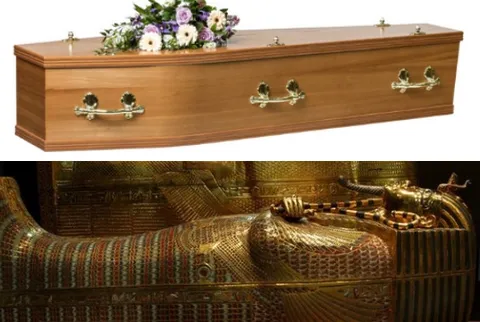
In June 2018, jokes about passengers who say thank you to the driver spread on Reddit. Among the early notable posts was one by user zenerations in r/dankmemes from June 16. In it, ordinary coffins of successful and unsuccessful people were contrasted with a luxurious Egyptian tomb for grateful passengers. The richness of the last burial served as a completely excessive reward for a short remark while getting off the bus.
The image was passed on to other Reddit communities, including r/MemeEconomy and r/WholesomeMemes. Then the same principle was transferred to different pictures: a polite passenger received honor, respect, or the status of an exceptional person. This is the history of the theme's spread, not the origin of every drawing used. The frame with Otto belongs to “The Simpsons”; which exact episode it came from has not been reliably established. The June date refers to the meme wave.
Who is being thanked in this picture
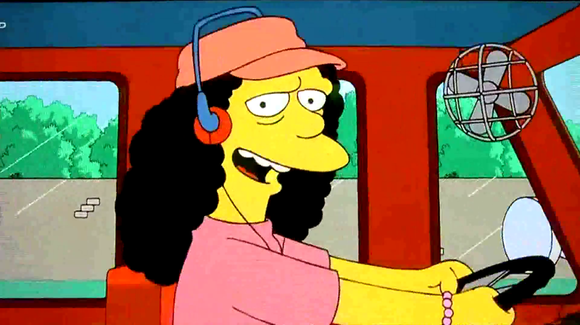
This shows Otto Mann, the school bus driver from “The Simpsons.” He has long black hair, a pink cap, and large headphones. He sits at the wheel; windows with green trees are visible beside him, along with cabin details. The frame itself has no caption and does not show a passenger saying thanks. So the reaction of bystanders or the driver's specific reply has to be added with a new caption.
Otto makes a rather abstract theme recognizable: instead of an unnamed profession, the viewer sees a familiar character at work. His everyday look emphasizes the small scale of the event. The bus keeps going, the driver stays at the wheel, and the only unusual action has to come from the passenger. It is around this unnoticed moment that one can build an exaggerated story of general admiration.
Why two words deserve a tomb
The core device is the disproportion between the deed and the recognition. The meme does not require the hero to perform a feat: it is enough to notice the work of a person usually seen as part of the transport. Then this simple action is placed above money, fame, and great achievements. A grave form of reward collides with an everyday occasion, and the viewer understands that the valuation is deliberately inflated. Recognizing the joke does not require knowing the schedule or the route.
The format also has a good-natured undertone. It lets you praise a person without a long speech of gratitude, while smiling at your own solemnity. In a version about the driver's reaction, the emphasis can shift: a short thank you turns out to be the most pleasant event of the whole shift. Then the exaggeration applies to the recipient's joy. Both versions rest on one small remark, but distribute attention between the two participants of the ride.
Three invented rides
In an invented student joke, graduates are handed diplomas, Olympiad winners get cups, and the person who thanks the driver of the university bus is offered an entire throne. Such a caption reproduces the original pairing of rewards. In another invented variant, a passenger says thanks after a ride to the airport, and an imaginary achievement system awards him the title “Legend of the Route.” What matters is the moment of getting off the bus, when everyone is usually already thinking about their own affairs.
The third invented example is built from Otto's side: “Forty stops, a hundred questions, and one thank you that makes it worth driving on.” The frame becomes a reaction to a pleasant little thing, rather than a portrait of a passenger who earned a reward. These captions have different constructions: a comparison, a playful achievement, and the summary of a shift. What unites them is the ability to make a small gesture of attention the main event of a completely ordinary ride.