What's shown
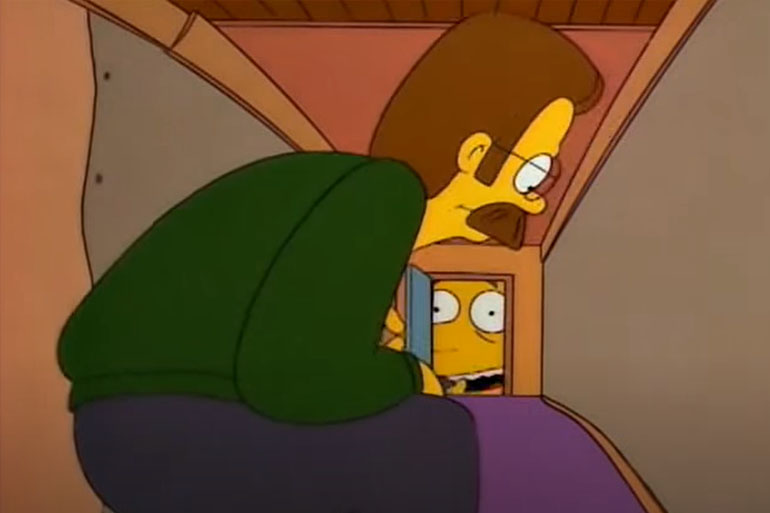
In the image, Homer stands with his back to the viewer, wearing green clothes, while Ned Flanders is visible through a doorway. The interior and characters match the animated series "The Simpsons." The composition suggests peeking in or a sudden visit, which is why the phrase "the Flanders house" has become a handy name for variants in which a character turns up next to an idealized neighbor's home. Across various episodes, the series has repeatedly shown Homer and Ned's mix of friendship and rivalry, so a single frame can end up with very different captions.
Neighbors as a comedy duo
Homer and Ned are built as a pair of contrasting neighbors. Ned is usually polite, devout, and tidy; Homer is impulsive, lazy, and often envious of Ned's calm family life. This contrast has fueled the storyline for years: Homer alternately accepts Ned, gets irritated by his successes, and takes advantage of his kindness. The image of the house becomes a symbol not just of the setting but of everything Homer believes his neighbor has arranged better. This association makes the shot legible even without knowing the specific episode.
Why someone else's house triggers the joke
The "looking at the neighbors" scene works through comparison: one person has order, comforts, or a coveted item, and the observer doesn't. Sometimes the character is simply curious; sometimes outward politeness masks envy. Transposed onto real life, the comparison can describe a coworker, a relative, or a blogger, but it's better to aim the humor at one's own feelings rather than turning a specific neighbor into the object of observation. The short clip is easy to drop into a collage about a renovation, a new gadget, or someone else's nice vacation.
Captions for everyday comparisons
"My neighbor bought a robot vacuum: suddenly I remembered I had a reason to stop by." "A coworker brought in a homemade pie, and I came over to ask about paperclips." "When I saw someone else's perfectly organized kitchen and decided to just check on the situation over there." These are invented everyday scenarios, not lines from the show. What works best is a single concrete detail: a lush lawn, an enclosed porch, new appliances, or a quiet evening. If the text spells out the entire plot, the viewer no longer has to fill in the joke themselves.
The show and the limits of interpretation
"The Simpsons" depicts the fictional American town of Springfield and satirically plays with familiar types of family life. The meme shot is not a guide to judging real neighbors, and it gives no grounds for attributing specific actions to Ned outside the show. Some versions of the template may use a different angle or caption; the image's filename alone doesn't establish which episode it's from. If the exact episode matters, it's worth tracking it down from the original still and checking the scene. For a general meme, it's enough to say that the Homer–Flanders contrast sets up a recognizable comparison situation.
The house can be turned into a stand-in for a place where, amazingly, everything just works for the neighbor: appliances run smoothly, no one forgets to buy groceries, and the plants never die. But the characters remain fictional, and it's best to avoid demeaning captions about real families based on appearance, faith, or wealth. The exact shot is best described by its visible composition — Homer with his back to the viewer in green clothes, Ned in the doorway — rather than confidently naming the episode without checking.