A lunch that keeps having to be explained
The sketch appeared in the episode “22 Short Films About Springfield” in 1996. It was written by Bill Oakley. School principal Seymour Skinner invited his boss, superintendent Gary Chalmers, to lunch, but the dish he had prepared burned. Instead of admitting the failure, he went out for hamburgers from Krusty Burger and tried to present them as his own work. Every detail required a new explanation, because the guest kept asking questions.
The name “Steamed Hams,” literally “steamed ham,” comes from an attempt to explain away the substitution for the promised steamed clams. Skinner declares the strange expression a regional name for hamburgers and ties it to Albany. This is a fabrication of the character within the scene, not the dish's real name. Later he has to explain the signs of a fire in the kitchen the same way, passing them off as the northern lights. The absurdity escalates, but the host keeps trying to maintain the appearance of a confident man until the end.
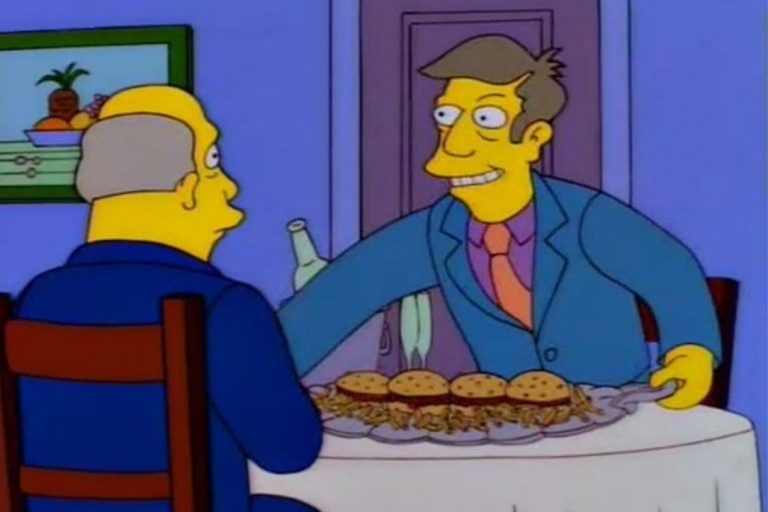
The hamburgers are already on the table
In this image Skinner stands on the right holding a large oval platter with four hamburgers and a side dish. He wears a blue jacket, a pink shirt, and an orange tie. Chalmers sits on the left, turned toward the host; the viewer sees mostly his back and head in profile. A bottle stands on the table, and a door and a painting are visible in the background.
The frame captures the moment of the lunch presentation. Neither the burning house nor the supposed northern lights are shown yet. Still, Skinner's smile and the unexpectedly familiar look of the food allow a viewer who knows the scene to anticipate the explanation. The image becomes a sign of a situation in which a man confidently offers a result whose origin he would rather not discuss.
Why the old dialogue is easy to reassemble
The scene has a stable sequence: a promise, a failure, a substitution, questions, and increasingly improbable justifications. Thanks to this, it can be recognized even after the voices, images, or musical accompaniment change. The viewer remembers which turn should come next and follows how the author of the new version handles the familiar task. The remix offers the pleasure of matching an expected structure with an unexpected way of performing it.
Before the big wave of video remakes, fan communities of The Simpsons used quotes and frames from the scene. In late 2017 and in 2018, music and editing versions on YouTube became especially noticeable. Oakley himself discussed this success and linked the recognizability partly to the short title. The original television episode and the later life online are separated by two decades: new viewers could first encounter the parody and only then the sketch itself.
Two new ways to hide a failure
The first imagined remake can be staged as a conversation in a workshop. Skinner promised to build the chair himself, then brought a ready-made one from a store and calls the factory sticker his signature mark. Chalmers recognizes the model and asks about the origin of the packaging. Every clue receives an increasingly absurd interpretation, while the sound of falling parts from the next room is declared a feature of the creative atmosphere.
The second example moves the lunch into a work presentation. The host confidently shows a chart, but the boss notices that the name of someone else's project is still on it. The hero declares it an internal code name, then explains the mismatched dates with a special team calendar. He presents the final error as a spectacular demo mode. The plot is recognized through the sequence of justifications, although the hamburgers are no longer there.
For a short meme, the frame alone with the dish and the caption “Homemade baking, if you take the box out before the guests arrive” is enough. There is no need to repeat the whole dialogue. The viewer recognizes the confident presentation of a store-bought result and mentally adds the questions the hero hoped to avoid. A single freeze frame holds the story together, because behind it stands a well-known scene.