The adventure left outside the frame
The image source is Mucho Mouse, a short cartoon from the Tom and Jerry series, released in 1957. The plot involves Tom's trip to Spain: the American cat arrives as a mouse-catching specialist and takes on Jerry, known there as El Magnifico. The professional's confidence becomes part of yet another comic rivalry between the two.
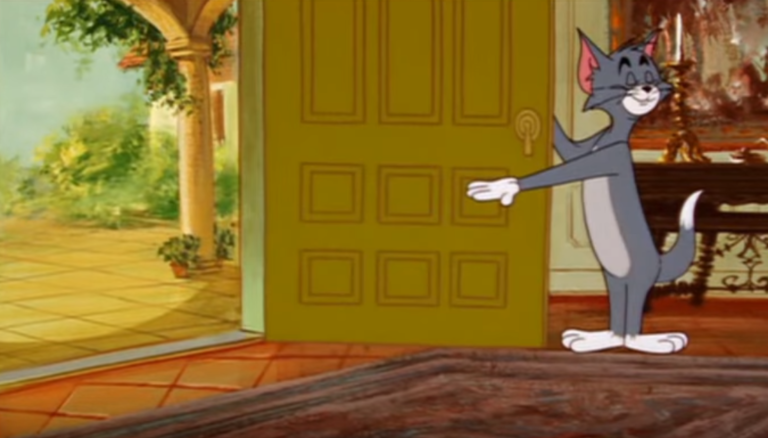
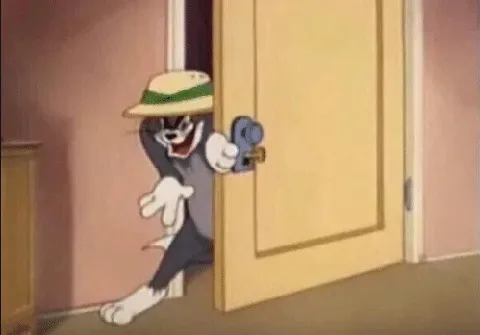
In the door scene, Tom catches Jerry and places him in a small cannon. Then he opens the exit and indicates with a gesture the direction the mouse is about to take. The meme itself crops the action down to the gesture of the one in charge. The cannon and Jerry stay outside this picture, so the viewer does not need to remember the whole episode to understand the invitation to leave the room.
The door and the palm speak without words
Tom stands on the right, next to a large yellow door. He smiles with his eyes half closed and extends an arm toward the exit, showing an open white palm. On the left are a sunlit veranda and greenery; inside the room, a rug and part of the furniture are visible. The doorway takes up a lot of space and turns the direction the cat indicates into the main subject of the image.
This is an outwardly softer pose than furious expulsion. The hero does not shout, does not lunge forward, and does not show a clenched fist. It is as if he is inviting the guest to go first, keeping his smile and composure. Yet in the meme reading, the polite presentation hides a quite decisive act: the conversation is already over. The absence of a specific addressee makes it easy to transfer the role of the unwanted visitor onto any participant of an invented dialogue. For such a substitution, a caption with that person's last line is enough.
The June wave and the frame's new role
One of the well-known early variants appeared on Reddit, posted by user paolonoci in mid-June 2018. The joke was built on the idea that, for the hero, the love of memes matters more than an expected romantic continuation of the meeting. By the end of June the format had spread to Russian-language entertainment communities as well. This is the story of a noticeable wave of use, not proof that no one saved or captioned the frame earlier.
From the cartoon, the internet took the moment of a settled decision. The caption usually states why Tom no longer wants to continue the acquaintance, while the picture answers with a gesture. The reason can be deliberately trivial: a person chooses a different dish, doesn't like a favorite game, or doesn't get a joke. The disproportion is what makes the expulsion funny. The cat treats an everyday disagreement as if it were deciding the question of admission to the house. Without a caption, the image keeps a broader meaning: “the exit is that way” or “that's the end of this.”
Three invented reasons to end the conversation
A hypothetical example: a host offers a guest tea, and the guest declares that they only drink it from a soup plate. Tom's gesture ends an acquaintance with someone else's habit. The refusal looks excessive and therefore works as a joking reaction to a strange taste.
Another invented dialogue: a friend arrives at a board game night and asks whether they can throw away the instructions before the rules are explained. The picture answers on behalf of the host, who has nothing more to discuss with such a helper. A third hypothetical example: a member of a film club offers to recount the ending to everyone who hasn't yet seen the movie. The smiling Tom points him to the exit before the spoiler is out. In all three cases, what's funny is the quick shift from an ordinary conversation to a ceremonial farewell; the stories themselves are not quotes from the cartoon or from early memes.